Kumasi’s Market Magic: Where Every Purchase Tells a Story
Walking through Kumasi’s bustling markets feels like stepping into a living photograph—vibrant, raw, and full of soul. As a photographer, I didn’t just come for the sights; I came to capture the heartbeat of West African commerce. From handwoven kente cloth to intricate wood carvings, every stall is a stage. This isn’t just shopping—it’s storytelling through images, light, and human connection. You don’t just buy souvenirs here; you take home moments frozen in time. The markets of Kumasi pulse with a rhythm that speaks to both the eye and the spirit, offering a rare blend of authenticity and artistry. For travelers who value culture, craft, and visual narrative, this city is not just a destination—it’s an invitation to witness tradition in motion.
Arrival in Kumasi: First Impressions Through the Lens
Kumasi greets visitors with a symphony of color, sound, and movement that unfolds the moment you step off the bus or out of a taxi. The air hums with the scent of roasting plantains, woodsmoke, and warm earth, while voices rise and fall in rhythmic trade banter. Brightly painted trotros—local minibuses—dart through traffic, their horns punctuating the city’s pulse. For a photographer, this sensory overload is not chaos but composition in motion. Every alleyway, roadside vendor, and passing face presents a potential frame, rich with texture and emotion. Unlike the more polished urban centers of Accra or Lagos, Kumasi retains a grounded authenticity that feels deeply rooted in tradition.
The city’s atmosphere is shaped by its history as the former capital of the Asante Kingdom, a legacy still visible in the pride of its people and the prominence of cultural symbols. As you approach the heart of Kumasi, the streets grow narrower, lined with open-fronted shops and clusters of women balancing baskets on their heads. Children wave as they pass, their school uniforms crisp against the backdrop of weathered walls and vibrant market tarps. The city doesn’t hide its complexity—it wears it openly, like a well-worn kente cloth, each thread telling part of a larger story. This rawness is what draws photographers and travelers seeking truth in travel, not just aesthetics.
Street life in Kumasi sets the tone for any photography-focused journey. Vendors arrange mounds of dried fish in neat pyramids, while others fan out colorful bolts of fabric like playing cards. The way light falls across a fruit stand at midday—highlighting the glossy skin of mangoes and the deep purple of eggplants—creates natural still lifes. These are not staged scenes but spontaneous arrangements born of necessity and beauty. For the observant lens, the city becomes a gallery without walls, where every corner offers a new exhibition. Understanding this rhythm is key to capturing authentic images that reflect daily life rather than tourist expectations.
Arriving with a camera in hand requires sensitivity. While the energy is inviting, it’s important to move with respect, observing before shooting, and acknowledging people as collaborators in the image-making process. A smile, a nod, or a simple greeting in Twi—such as “Maakye” (good morning)—can open doors more effectively than a lens cap. Kumasi’s residents are accustomed to visitors, but they appreciate genuine engagement over hurried snapshots. Those who take time to connect often find themselves welcomed into moments that transcend the ordinary: a grandmother adjusting her granddaughter’s headwrap, a tailor threading a needle under a single bulb, a man stacking calabashes in perfect symmetry. These are the images that endure, not because of technical perfection, but because of their humanity.
Kejetia Market: The Pulse of West African Trade
At the center of Kumasi’s commercial life lies Kejetia Market, one of the largest open-air markets in West Africa. Spanning several city blocks, it is a labyrinth of stalls, passageways, and hidden courtyards where thousands of traders conduct business daily. To enter Kejetia is to step into the economic engine of the region, where everything from household goods to traditional medicine finds a buyer. The market’s scale is staggering—estimated to host over 10,000 vendors—and its energy is palpable the moment you cross its threshold. The air is thick with the mingling aromas of spices, fresh produce, and leather, while the constant murmur of bargaining forms a steady background hum.
Kejetia is organized in zones, each dedicated to specific goods. One section overflows with textiles—rolls of wax print, batik, and, most notably, kente cloth in every imaginable hue. Another area specializes in foodstuffs: dried fish, smoked meats, bundles of dried peppers, and towering sacks of yam flour. Elsewhere, you’ll find hardware, clothing, shoes, and even electronics, though these tend to be secondhand or locally assembled. The diversity of goods reflects both local needs and regional trade networks that stretch across West Africa. For a photographer, the challenge is not in finding subjects, but in choosing where to focus. Every turn reveals a new tableau: a woman balancing a tray of pastries on her head, a man arranging wooden stools in concentric circles, a child sorting through buttons like treasure.
Navigating Kejetia requires both awareness and adaptability. The pathways are narrow and often crowded, with shoppers, porters, and delivery bikes weaving through the flow. It’s easy to become disoriented, so it helps to identify landmarks—such as a prominent umbrella stall or a brightly painted kiosk—before venturing too deep. For photographers, this density creates dynamic compositions, but it also demands caution. Keeping your camera secure and avoiding sudden movements helps prevent misunderstandings. Some vendors may be wary of being photographed, especially if they believe images will be used commercially. A simple gesture—pointing to your camera and asking with your eyes—often suffices to gain permission. When in doubt, a small courtesy, such as purchasing a small item, can go a long way in building trust.
The market’s rhythm follows the sun. Mornings are the most active, with deliveries arriving before dawn and stalls fully stocked by 8 a.m. This is the ideal time for photography, when light filters through canvas canopies and goods are freshly arranged. By midday, the heat intensifies, and some vendors retreat into shaded corners, fanning themselves with cardboard. Late afternoon brings a second surge as people return from work to shop for dinner. Evenings are quieter, though certain sections remain open, lit by bare bulbs and mobile phone flashlights. Understanding this daily cadence allows photographers to plan their visits for optimal lighting and activity. Capturing Kejetia at different times reveals its many faces—from the energetic rush of morning trade to the contemplative stillness of closing hours.
Photographing People and Stalls: Capturing Authentic Moments
Street photography in Kumasi’s markets is less about technical perfection and more about emotional resonance. The goal is not to document every stall or person, but to find moments that reveal character, connection, and continuity. In a place as visually rich as Kejetia, the temptation is to shoot constantly, but the most powerful images often come from patience and presence. Waiting for the right expression, the subtle gesture, or the play of light across a face can yield photographs that linger in the mind long after the camera is put away. The key is to move with intention, observing not just what is visible, but what is felt.
Candid photography must be balanced with respect. While some travelers believe that unobserved shots are the most authentic, this approach can feel invasive, especially in close-knit communities where privacy is valued. A more effective method is to engage first, even briefly. A smile, a greeting, or a moment of shared laughter can create an opening for a photograph that feels collaborative rather than extractive. Many vendors are proud of their work and happy to be photographed if asked. Some may even adjust their posture or straighten their wares, not out of vanity, but as a sign of dignity. These small interactions enrich the image, adding layers of meaning that go beyond aesthetics.
Eye contact is a powerful tool in street photography. A direct gaze can transform a simple portrait into a moment of human exchange. In Kumasi, where people are accustomed to both admiration and scrutiny, a respectful look through the lens can signal recognition rather than objectification. When photographing artisans at work—such as a woman pouring shea butter into clay bowls or a man carving Adinkra symbols into wood—focusing on the hands and face together tells a fuller story. The texture of calloused fingers, the concentration in the eyes, the rhythm of movement—all contribute to a narrative of skill and dedication.
Lighting plays a crucial role in shaping these images. The markets are rarely evenly lit; instead, light filters through gaps in tarps, reflects off metal trays, or spills from overhead wires. This creates natural contrasts and highlights that can be used creatively. Shooting during the early morning or late afternoon offers softer, warmer tones, while midday light, though harsh, can produce bold silhouettes and sharp shadows. Using a polarizing filter can help manage glare on glossy surfaces like waxed fabric or polished wood. For digital photographers, shooting in RAW format allows greater flexibility in post-processing, especially when dealing with mixed lighting conditions.
One of the most compelling aspects of market photography is the way it captures the intersection of tradition and modernity. In one frame, you might see a woman in a traditional headwrap using a mobile phone to record a transaction, or a child wearing a football jersey while helping her mother sort spices. These juxtapositions reflect the lived reality of Kumasi—where heritage and progress coexist. Photographs that honor this complexity avoid clichés and instead present a nuanced view of contemporary African life. They show not a frozen past, but a dynamic present, where culture is not preserved behind glass but lived daily in the marketplace.
Kente Cloth Shopping: Color, Craft, and Cultural Significance
No visit to Kumasi is complete without encountering kente cloth, one of Ghana’s most iconic cultural symbols. Woven in narrow strips and stitched together into larger pieces, kente is more than fabric—it is a language of color, pattern, and meaning. Each design carries a name and a story, often referencing proverbs, historical events, or philosophical ideas. For photographers and shoppers alike, the kente sections of Kumasi’s markets offer a feast for the senses. Bolts of cloth hang like banners, their vibrant hues—deep indigo, golden yellow, crimson red—catching the light and drawing the eye from afar.
Understanding kente begins with recognizing its origins. Traditionally woven by the Asante and Ewe peoples, the cloth was once reserved for royalty and special occasions. Today, it is worn more widely, but its significance remains. Patterns such as Eban (meaning “security” or “safety”) or Sika Futuro (“gold dust”) reflect values and aspirations. Colors also carry meaning: green for growth, blue for peace, black for maturity and ancestral connection. For visitors, learning even a few of these symbols transforms shopping from a transaction into a cultural dialogue. Photographers can deepen this experience by capturing not just the cloth, but the stories behind it—through images of weavers at work, elders explaining patterns, or families selecting kente for a festival.
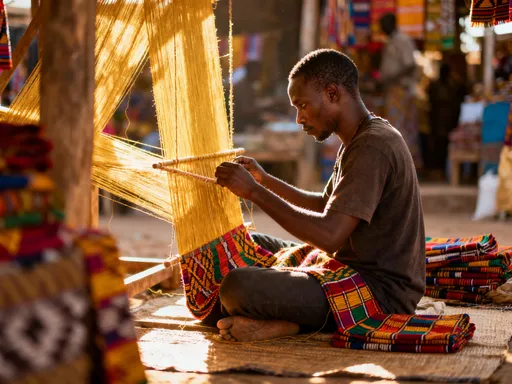
When shopping for kente, authenticity matters. Real handwoven kente is produced on wooden looms, a process that can take days or even weeks for a single piece. The texture is slightly irregular, with subtle variations in thread thickness and tension—signs of human craftsmanship. In contrast, machine-made imitations, often imported from Asia, have a uniform, almost plastic-like feel. To identify genuine kente, examine the back: handwoven pieces show visible seams where strips are joined, while machine versions are seamless. Vendors in Kumasi’s craft markets, particularly around the Kejetia and Bantama areas, are more likely to sell authentic cloth. Prices vary based on size, complexity, and provenance, but a fair range for a full six-yard piece is between 300 and 800 Ghana cedis, depending on quality.
Photographing the weaving process adds depth to the kente experience. In neighborhoods like Adanwomase, just outside Kumasi, family-run workshops continue the tradition. Here, men and women sit at upright looms, their hands moving with practiced precision. The rhythmic clack of the shuttle, the tension of the threads, the concentration in their eyes—all make for compelling imagery. Capturing these moments requires patience and permission, but the results are invaluable. A single photograph of a weaver mid-motion can convey generations of skill and dedication. For travelers, bringing home such an image alongside a piece of kente creates a layered memory—one that honors both the art and the artist.
Wood Carvings and Artisan Zones: Hunting for Unique Finds
Beyond textiles, Kumasi is renowned for its wood carvings, particularly those featuring Adinkra symbols and traditional stools. These items are not merely decorative; they carry cultural weight and spiritual significance. The artisan zones, often located in quieter neighborhoods or tucked behind main market alleys, offer a more intimate shopping experience. Here, craftsmen work under shaded awnings or in small courtyards, sanding, chiseling, and polishing their creations. The air is filled with the scent of sawdust and oil, and the sound of tapping tools provides a steady rhythm. For photographers, these spaces offer excellent opportunities for close-up shots that highlight texture, detail, and the human touch.
Adinkra symbols, originally developed by the Asante, are visual representations of proverbs and philosophical concepts. Each symbol has a name and meaning—Gye Nyame (“Supremacy of God”), Sankofa (“Go back and fetch it”), Osram Ne Nsoromma (“Moon and Star”)—and is often stamped onto cloth or carved into wood. In Kumasi’s artisan workshops, you’ll find these symbols on stools, plaques, and jewelry. Purchasing a piece with an Adinkra symbol is more than acquiring art; it’s adopting a piece of wisdom. Photographers can create powerful compositions by focusing on the carving process—hands guiding a chisel, dust settling on a half-finished symbol, a finished piece held up to the light.
When shopping for wood carvings, it’s important to distinguish between handmade and mass-produced items. Authentic pieces are carved from local hardwoods such as odum or sese and show slight imperfections—variations in grain, subtle asymmetry, tool marks. Mass-produced versions, often made from softer wood or composite materials, feel lighter and have a uniform, almost plastic-like finish. Prices for genuine carvings vary, but a fair range for a medium-sized stool is between 150 and 400 Ghana cedis. Bargaining is expected, but it should be done respectfully, recognizing the skill and time involved. Many artisans appreciate when buyers ask about the meaning of a piece, as it shows genuine interest rather than mere commerce.
Interacting with artisans can lead to meaningful exchanges. Some are happy to demonstrate their techniques or explain the symbolism behind their work. These moments, when captured through photography, add narrative depth to your collection. A portrait of a carver with his tools, a detail shot of a freshly carved symbol, or a sequence showing the progression from raw log to finished stool—all contribute to a visual story that honors the craft. For travelers, these interactions transform souvenirs into heirlooms, objects that carry not just beauty, but memory and meaning.
Hidden Courtyards and Craft Workshops: Off-the-Beaten-Path Photography Spots
While Kejetia Market offers a vibrant introduction to Kumasi’s commerce, the city’s true artistic heart often lies beyond the main thoroughfares. In quiet neighborhoods and residential alleys, hidden courtyards house generations of artisans who continue traditional crafts away from the tourist gaze. These spaces—sometimes marked only by a faded sign or a cluster of wood shavings at the gate—offer photographers a chance to capture more intimate, less performative moments. Lighting in these workshops is often softer, filtered through palm fronds or canvas roofs, creating natural diffusers that enhance image quality. The absence of crowds allows for longer, more contemplative shots, where composition and connection take precedence over speed.
Access to these workshops is often easier with a local guide or introduction. Some community-based tourism initiatives in Kumasi offer walking tours that connect visitors with artisans in Bantama, Asokwa, and other craft-rich areas. These guided visits ensure respectful engagement and often include opportunities to participate—such as trying a hand at weaving or stamping Adinkra symbols. For photographers, this access means being welcomed into spaces that might otherwise remain closed. A single afternoon in such a courtyard can yield a portfolio of images that feel more personal and profound than those taken in busier markets.
These off-the-beaten-path locations also highlight the sustainability of traditional skills. In one courtyard, a grandfather may teach his grandson to carve a stool, passing down techniques unchanged for decades. In another, a woman may hand-stamp Adinkra cloth using a calabash and natural dye. These scenes, when photographed with care, become records of cultural continuity. They show that tradition is not static, but lived and adapted through generations. For travelers, supporting these artisans—by purchasing their work or sharing their stories—becomes an act of preservation.
Photographically, these spaces invite slower, more intentional work. Using a prime lens with a wide aperture can isolate subjects against soft backgrounds, emphasizing detail and emotion. Shooting in natural light avoids the harshness of flash, which can disrupt the mood and startle subjects. Capturing sequences—such as the stages of carving, dyeing, or weaving—adds narrative structure to your visual story. These images, when curated together, do more than document a trip; they bear witness to resilience, skill, and quiet dignity.
From Lens to Legacy: Making Your Photos and Purchases Meaningful
Photography has the power to transform travel from a series of transactions into a tapestry of memory and meaning. In Kumasi, where every market stall tells a story and every artisan carries a legacy, the images we capture become more than souvenirs—they become testaments. A photograph of a kente weaver, a wood carver, or a market vendor is not just a record of what was seen, but a recognition of who was met. When paired with a thoughtful purchase—a handwoven cloth, a carved stool, a stamped plaque—the experience deepens. These objects, when brought home, serve as tangible links to a place and its people, their value measured not in currency, but in connection.
Curating a visual story from your market visits requires intention. Rather than collecting hundreds of snapshots, consider selecting a smaller number of images that reflect the essence of your journey. Look for photos that capture emotion, skill, and cultural context—not just bright colors or exotic surfaces. A well-chosen series can convey the rhythm of Kejetia, the quiet focus of a workshop, the pride in a vendor’s smile. When shared with others, such images can challenge stereotypes and foster appreciation for the depth and dignity of everyday life in Kumasi.
For travelers, especially women between 30 and 55 who value family, heritage, and meaningful experiences, Kumasi offers a rare opportunity. It is a place where tradition is not performed for tourists, but lived with quiet confidence. The markets are not staged sets, but real spaces of labor, love, and livelihood. To walk through them with a camera and an open heart is to participate in a dialogue that spans cultures and generations. Every purchase, every photograph, becomes a thread in a larger story—one of resilience, beauty, and human connection.
Kumasi is not just a destination. It is a living gallery, where commerce and culture intertwine, and where every encounter leaves an imprint. For those who come with respect and curiosity, the city gives generously—not just in goods, but in wisdom. As you pack your bags and review your photos, you may find that what you’ve brought home is not just art, but a deeper understanding of what it means to create, to trade, to belong. In the end, the true souvenir is not what you carry, but what you carry forward.