You Won’t Believe These Hidden Urban Spots in Bern
Bern is more than just Switzerland’s quiet capital—its urban spaces hide unexpected charm. Away from the clocktower crowds, I discovered quiet courtyards, riverside hangouts, and alleyway art that locals love but rarely share. If you're seeking authentic city vibes beyond postcard views, Bern’s offbeat corners deliver. This is urban exploration at its most genuine—peaceful, surprising, and totally unspoiled.
Rethinking Bern: Beyond the Postcard
Bern is often celebrated for its well-preserved medieval old town, a UNESCO World Heritage site lined with sandstone arcades and ornate fountains. Tourists flock to see the Zytglogge clock tower and snap photos of the Bear Park, and rightly so—these landmarks reflect centuries of history and civic pride. Yet, to experience Bern only through its iconic sights is to miss a quieter, more intimate side of the city. Beyond the polished facades and guided walking tours lies a network of overlooked urban spaces where daily life unfolds with gentle rhythm. These are not destinations marketed in brochures, but living parts of the city where residents gather, artists create, and nature quietly reclaims forgotten corners.
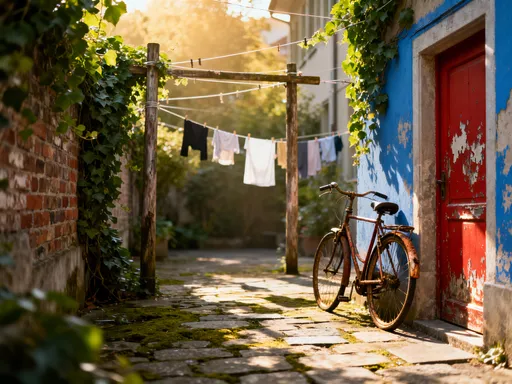
What makes these hidden spots special is their authenticity. They are not designed for spectacle but for use—places where a grandmother waters her window boxes, teenagers sketch in notebooks by the river, or neighbors share coffee in a sunlit courtyard. Urban exploration in Bern becomes more meaningful when it shifts from ticking off monuments to observing how people inhabit their environment. The city’s charm isn’t confined to its grand architecture; it pulses in the understated details: a weathered door painted bright blue, ivy climbing a brick wall, or the soft echo of footsteps in a covered passageway.
Exploring off-the-beaten-path areas also transforms the traveler’s experience. Instead of following crowds, one begins to move at the city’s natural pace. This kind of travel encourages mindfulness—slowing down, noticing textures, listening to ambient sounds, and allowing discoveries to unfold organically. In an age where many destinations feel overexposed or commercialized, Bern offers something rare: urban spaces that remain unpolished, uncurated, and deeply human. These pockets of calm and character remind us that the soul of a city often resides not in its highlights, but in its quiet margins.
The Mattenquartier Secret: Local Life Between Buildings
Nestled just west of the old town and bordered by the meandering Aare River, the Mattenquartier is a neighborhood that escapes most tourist maps. Unlike the postcard-perfect alleys of Bern’s historic center, this area reveals a more lived-in aesthetic—industrial remnants softened by greenery, converted warehouses with climbing roses, and narrow lanes that open into hidden courtyards. It’s a place where urban density meets community warmth, and where architecture serves not just form, but function and connection.
Once home to small factories and artisan workshops, the Mattenquartier has evolved into a mixed-use district that balances preservation with modern living. Old brick buildings now house apartments, studios, and small businesses, while vacant lots have been transformed into community gardens. These shared green spaces are more than decorative—they are vital social hubs. On summer evenings, residents gather for informal barbecues, children play among raised vegetable beds, and neighbors exchange recipes for herbs they’ve grown together. The sense of ownership and care is palpable, a testament to how thoughtful urban planning can nurture social bonds.
One of the most striking features of the Mattenquartier is its network of interior courtyards. Accessed through unassuming archways or narrow staircases, these spaces feel like secret gardens tucked between buildings. Some are paved with cobblestones and furnished with benches; others are overgrown with wisteria and host bird feeders. They are not tourist attractions, nor are they meant to be. Instead, they serve as quiet retreats—places to read, sip tea, or simply sit in solitude amid the city. Their existence speaks to a European tradition of shared urban living, where privacy and community coexist in close proximity.
What makes the Mattenquartier truly special is its authenticity. There are no souvenir shops, no guided tours, and no crowds. It is a neighborhood first and foremost for those who live there. Yet, visitors who wander through respectfully will find it deeply rewarding. The area invites slow exploration—pausing to admire a hand-painted mailbox, noticing the variety of window displays, or catching the scent of bread from a local bakery. It’s a reminder that cities are made not just of monuments, but of everyday moments and shared spaces that foster belonging.
Altes Tramdepot: Culture in a Forgotten Corner
On the edge of the Länggasse district, housed within a repurposed early 20th-century tram storage facility, the Altes Tramdepot stands as a shining example of adaptive reuse in urban design. Once a functional but forgotten industrial site, it has been transformed into a vibrant cultural center that pulses with creative energy. The building retains its original brick façade and high ceilings, but inside, it hums with the activity of artists, musicians, and locals drawn to its eclectic mix of offerings. This is not a museum or a formal gallery, but a living, breathing space where culture emerges organically from community engagement.
The heart of the Altes Tramdepot is its café, a welcoming space with mismatched furniture, chalkboard menus, and the aroma of freshly ground coffee. It serves as both a social hub and a performance area—on weekend evenings, local bands play jazz or folk music to appreciative audiences seated at wooden tables. The walls are lined with rotating art exhibitions, often featuring works by emerging Swiss artists. Adjacent to the café, several small studios provide workspace for painters, sculptors, and designers, some of whom open their doors during monthly art nights, inviting the public to observe their process and ask questions.
One of the most popular features of the Altes Tramdepot is its weekend flea market, which spills into the adjacent courtyard. Here, vendors sell vintage clothing, handmade ceramics, secondhand books, and repurposed furniture. It’s not a commercialized bazaar, but a grassroots gathering that reflects Bern’s appreciation for sustainability and craftsmanship. Shoppers browse at a leisurely pace, often pausing to chat with sellers or sip tea from the outdoor kiosk. The atmosphere is relaxed, inclusive, and distinctly local—exactly the kind of experience that enriches urban life without relying on mass tourism.
The success of the Altes Tramdepot lies in its ability to breathe new life into a forgotten structure while preserving its historical character. It exemplifies a growing trend in European cities: the transformation of underutilized industrial spaces into centers of creativity and connection. By doing so, Bern not only conserves architectural heritage but also creates opportunities for cultural expression and social interaction. For visitors, the Altes Tramdepot offers a rare glimpse into the city’s artistic pulse—a place where art is not confined to institutions, but woven into the fabric of everyday life.
Riverside Retreats: Where Bern Breathes
The Aare River is Bern’s lifeblood, winding through the city in a deep emerald curve that shapes its geography and spirit. While many visitors know of the popular swimming zones where locals leap into the cool currents during summer, fewer explore the quieter stretches of riverbank that offer solitude and serenity. These lesser-known access points—small stone platforms, grassy knolls, and shaded paths—are where Berners truly unwind. Away from the splash and laughter of the main swimming areas, the river becomes a place of reflection, reading, and quiet companionship.
One such spot is a modest stone ledge just downstream from the Marzili funicular, reachable via a narrow footpath lined with wildflowers. Here, people sit with notebooks, headphones, or sketchpads, lulled by the sound of water rushing over rocks. In the early morning, mist rises from the surface, creating a dreamlike atmosphere. By midday, sunlight dapples the river, and children crouch at the edge, skipping flat stones. In autumn, the trees along the bank turn gold, their reflections shimmering in the current. Each season imprints the riverside with a different mood, yet the sense of calm remains constant.
These riverside retreats are more than scenic—they are essential to Bern’s urban well-being. The city’s layout ensures that most neighborhoods are within a short walk of the Aare, making nature easily accessible. This proximity fosters a culture of outdoor relaxation that is deeply embedded in daily life. It’s common to see office workers eating lunch on the grass, couples strolling hand in hand, or retirees fishing with simple rods. The river is not a backdrop, but an active participant in the city’s rhythm, offering a mental reset amid urban demands.
What makes these spaces so effective is their simplicity. There are no elaborate facilities, no admission fees, no schedules. Just open access to water, sky, and greenery. This unstructured environment encourages spontaneous use—people come as they are, stay as long as they like, and leave without fanfare. It’s a model of urban design that prioritizes human needs over commercial interests. For travelers, spending time along these quieter banks offers a deeper understanding of Bern’s character: a city that values peace, nature, and the quiet joy of simply being present.
Hidden Passages and Alley Art
Bern’s old town is built on multiple levels, connected by a network of staircases, covered arcades, and narrow alleyways that few tourists take the time to explore. These passages are not merely functional—they are spaces of discovery, where medieval engineering meets modern expression. Winding between buildings, they create a sense of mystery and intimacy, inviting slow, attentive walking. Some are lined with ivy, others with hand-painted signs or murals no larger than a notebook. They are the city’s hidden veins, carrying quiet energy through its historic core.
One of the most enchanting features of these passages is the subtle street art that appears in unexpected places. Unlike bold graffiti seen in larger cities, Bern’s urban art tends to be delicate and temporary—chalk drawings on stone steps, stenciled birds on retaining walls, or tiny mosaics embedded in pavement. These works are often created by local artists or even children, and they change with the seasons. A heart drawn in粉笔 (chalk) may last only a day, washed away by rain, but its fleeting nature adds to its charm. They are not meant for permanence, but for momentary joy.
Many of these alleyways also serve as shortcuts between major streets, known primarily to residents who use them to avoid tourist crowds. One such route connects the Kramgasse with the Schulgasse via a covered stone arcade that dates back to the 15th century. Lit by natural light filtering through high windows, it feels like stepping into another era. The acoustics amplify soft sounds—the rustle of a bag, the tap of a cane—creating a meditative atmosphere. These spaces encourage mindfulness, urging the walker to slow down and notice details: the texture of weathered stone, the pattern of old tiles, the way light shifts with the time of day.
The blend of historical structure and contemporary expression in these passages reflects Bern’s ability to honor its past while embracing the present. The city does not treat its old town as a museum piece, but as a living environment where tradition and innovation coexist. These hidden routes are not just physical pathways, but symbolic ones—connecting centuries, communities, and ways of seeing. For the observant traveler, they offer some of the most authentic and poetic moments in the city.
Why These Spaces Matter: The Soul of the City
The hidden spots of Bern—its quiet courtyards, riverside benches, repurposed buildings, and narrow alleys—are not merely charming details. They are essential components of the city’s identity and livability. In an era when many urban centers prioritize efficiency, density, and economic output, Bern stands out for preserving spaces that serve human needs beyond productivity. These areas support calm, foster connection, and allow for spontaneity—qualities that are increasingly rare in modern cities.
What unites these spaces is their emphasis on human scale. They are designed for walking, lingering, and informal interaction, not for speed or spectacle. A bench by the river invites rest; a shared courtyard encourages conversation; a small gallery in a converted tram depot welcomes curiosity. These are places where social bonds are strengthened not through organized events, but through casual encounters—exchanging a smile, sharing an umbrella, or commenting on a piece of art. Such moments may seem minor, but collectively, they build a sense of belonging and trust within a community.
Bern’s approach aligns with global movements advocating for more livable cities—those that prioritize green space, walkability, and social equity. Urban planners and designers increasingly recognize that well-being depends not just on infrastructure, but on the quality of everyday environments. Cities that invest in small, accessible public spaces tend to have higher levels of civic engagement and mental health. Bern, though modest in size, exemplifies how thoughtful design can create a deeply humane urban experience.
Moreover, these hidden spots reflect a cultural value: the appreciation of understated beauty. In a world that often celebrates the loud, the new, and the extraordinary, Bern finds elegance in the quiet, the old, and the ordinary. This ethos is evident in how locals care for their neighborhoods, support independent culture, and protect natural access. For visitors, engaging with these spaces offers more than scenic rewards—it provides insight into a way of life that balances tradition, sustainability, and human connection.
How to Explore Bern Like a Local: Practical Tips
To truly experience Bern beyond the guidebook, a shift in mindset is required. Instead of rushing from landmark to landmark, consider wandering without a fixed itinerary. Leave the GPS behind and allow yourself to get slightly lost. Some of the best discoveries happen when you follow a narrow street downhill, curious about where it leads, or pause to investigate a courtyard glimpsed through an open gate. The city rewards curiosity, especially when approached with respect and patience.
Timing also matters. Midweek mornings are ideal for quiet exploration, when tourist crowds are thinner and locals are beginning their day. Visit the Mattenquartier around 10 a.m. to see gardeners tending their plots or shopkeepers arranging window displays. Head to the Altes Tramdepot on a Saturday afternoon to experience the flea market’s lively yet relaxed vibe. For riverside serenity, arrive early—by 7 or 8 a.m.—when fog still hovers over the Aare and the city feels hushed.
Start your journey in the old town, but resist the urge to stay on the main streets. Turn onto side alleys, climb stone staircases, and follow the sound of water or birdsong. Carry a small notebook or camera, but avoid intrusive behavior. These spaces are not performances; they are real parts of people’s lives. Observe without disturbing, photograph without disrupting, and always be mindful of private areas. Take nothing but memories, and leave nothing but footprints.
Most importantly, slow down. Let the city reveal itself gradually. Sit on a bench for twenty minutes. Listen. Watch how light moves across a wall. Notice the rhythm of daily life. When you allow Bern to unfold at its own pace, you begin to understand it not as a collection of sights, but as a living, breathing community. And in that understanding, you find the true magic of travel—not in what you see, but in how you feel.
Bern’s magic isn’t in its guidebook highlights, but in the spaces between—where locals live, linger, and connect. By stepping off the main paths, travelers gain a deeper understanding of how a city truly functions. These quiet urban corners aren’t just scenic; they’re essential to Bern’s identity. Exploring them isn’t just rewarding—it’s a reminder that the best travel moments are often the ones no one told you to see.