You Won’t Believe What I Ate in Darwin — A Local Food Secret Nobody Talks About
If you think you know Australian food, Darwin will completely surprise you. Nestled up in the tropical north, this sun-drenched city isn’t just about crocs and national parks — it’s a hidden food paradise where cultures collide on a plate. I went looking for adventure and ended up discovering a culinary scene bursting with bold flavors, fresh seafood, and Indigenous influences you won’t find anywhere else. This is real, unfiltered, local Darwin — and it all happens in night markets, roadside stalls, and family-run kitchens off the tourist trail.
Arrival in the Top End: First Impressions of Darwin’s Vibe
Darwin greets visitors with a slow, sun-bleached rhythm that feels worlds away from Australia’s bustling southern cities. The air is thick with humidity, carrying the scent of frangipani and saltwater. Palm trees sway above wide, quiet streets where locals move at a pace that suggests they’ve long mastered the art of relaxation. It’s easy to overlook Darwin as merely a launchpad for excursions into Kakadu or Litchfield National Park, but those who pause discover a city pulsing with multicultural energy and quiet confidence. Unlike more polished urban centers, Darwin wears its diversity proudly — in its languages, music, and most vividly, in its food.
The city’s compact size belies its cultural richness. You’ll hear languages from across Southeast Asia, see temples and mosques nestled beside cafes, and pass by murals that reflect both Aboriginal heritage and contemporary Pacific Island influences. This isn’t a city trying to be cosmopolitan — it simply is. And nowhere is this authenticity more evident than at the dinner table. Meals here are not formal affairs but communal experiences, often shared on plastic stools under fairy lights or at weathered picnic tables by the sea. The rhythm of life follows the sun: early mornings at the wharf, siesta-like afternoons, and evenings that come alive with the sizzle of grills and laughter from open-air kitchens.
What struck me most was how food serves as Darwin’s true social fabric. While other cities might celebrate their skyline or museums, Darwin’s pride lies in its ability to feed people well, generously, and with deep respect for tradition. Whether it’s a steaming bowl of laksa from a Cambodian grandmother or grilled barramundi seasoned with native pepper leaf, every bite tells a story of migration, adaptation, and connection. To understand Darwin, you don’t need a guidebook — you need a fork.
Why Darwin’s Cuisine Is Unlike Anywhere Else in Australia
Australian cuisine is often stereotyped as meat pies, barbecues, and flat whites — and while those have their place, Darwin redefines what it means to eat Australian. Here, the food is shaped less by British roots and more by its proximity to Asia and its deep Aboriginal history. The result is a culinary identity that feels both ancient and refreshingly modern. The tropical climate allows for an abundance of fresh produce — mangoes the size of grapefruits, rambutans that drip with juice, and coconuts cracked open on the spot. But it’s the fusion of cultures that makes Darwin’s food truly unique.
The city’s population includes strong communities from the Philippines, Vietnam, Malaysia, Greece, and Torres Strait Islands, all contributing to a dynamic food landscape. You’ll find Greek souvlaki stands next to Vietnamese pho carts, and Malaysian roti served beside Aboriginal bush tucker platters. This isn’t fusion for trend’s sake — it’s the natural outcome of decades of cross-cultural exchange. What sets Darwin apart is how seamlessly these traditions coexist, each preserving its integrity while enriching the whole. A plate of spicy Filipino sisig, for instance, might be served on a banana leaf with a side of native finger limes, bridging continents in a single bite.
Equally distinctive is the use of native ingredients, long overlooked in mainstream Australian cooking but central to Darwin’s identity. Lemon myrtle, with its citrusy punch, is used in everything from sauces to desserts. Kakadu plum, one of the world’s richest sources of vitamin C, appears in chutneys and marinades. Wattleseed, roasted and ground, adds a coffee-like depth to spice blends. These are not novelty items but staples in many local kitchens, passed down through generations or shared between neighbors. The flavors are bold, often spicy, and never shy — a reflection of the climate and the people who thrive in it.
The Hidden Heartbeat of Darwin: Night Markets and Street Food Culture
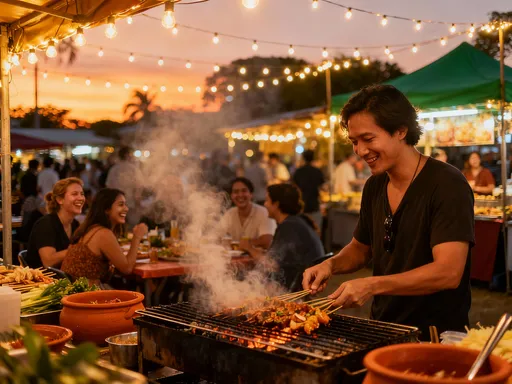
If Darwin has a culinary soul, it beats strongest at the Darwin Night Market. Held every Thursday, Friday, and Saturday evening at the city’s waterfront, this vibrant gathering is far more than a tourist attraction — it’s a weekly ritual for locals. Strings of lights crisscross overhead, live acoustic music drifts through the air, and long communal tables fill with families, couples, and groups of friends sharing dishes from dozens of food stalls. The market is a sensory explosion: the tang of tamarind, the smokiness of charcoal grills, the clatter of woks, and the laughter of children weaving between tables.
While souvenir stalls sell handmade crafts and tropical prints, it’s the food that draws the longest lines. One standout is a small wood-fired oven serving pizzas topped with bush tomatoes — a native ingredient that tastes like a cross between sun-dried tomato and smoked paprika. Another popular stall offers Cambodian green curry, slow-cooked with lemongrass, kaffir lime leaves, and fresh coconut milk, served over jasmine rice. A Filipino family runs a counter dishing out sizzling sisig — chopped pork face and ears seasoned with calamansi and chili — a dish that might sound daring but disappears fast from every plate.
What makes the night market special isn’t just the food, but the atmosphere of inclusion. There’s no hierarchy here — a judge from the Supreme Court might be sitting beside a fisherman in gumboots, both elbow-deep in mud crab claws. Children lick mango sticky rice from their fingers while elders sip iced tea and watch the sunset over the Timor Sea. The market isn’t staged for visitors; it’s a genuine expression of Darwin’s community spirit. Even the payment system reflects this informality — many vendors operate on trust, offering change from a coffee tin or accepting barter for a homemade dessert. It’s food as connection, not commerce.
Going Beyond the Market: Off-the-Beaten-Path Eats Only Locals Know
While the night market offers a feast for the senses, some of Darwin’s most memorable meals happen far from the crowds. Venture a few blocks from Mitchell Street, the usual tourist hub, and you’ll find unmarked doors leading to family-run Vietnamese cafes where the pho simmers for 12 hours and the herbs are picked fresh that morning. One such spot, tucked behind a laundromat, serves bun cha — grilled pork patties in a tangy fish sauce broth, topped with rice noodles and a mountain of mint and bean sprouts. There’s no menu in English, no website, and no signage — just a handwritten note in Vietnamese taped to the door. But the line of locals waiting outside by noon is all the endorsement you need.
Another hidden gem is a battered food van parked near the Cullen Bay Marina, recognizable only by its faded blue tarp and the steady stream of fishermen pulling up on motorbikes. It serves what many consider the best fish and chips in the Northern Territory — wild-caught barramundi, lightly battered in rice flour and fried to golden perfection, served in paper cones with a squeeze of lime. There’s no seating, no condiments beyond salt and pepper, and cash only. But the fish is so fresh it tastes like it jumped straight from the water onto your plate.
For those seeking a deeper cultural experience, Aboriginal-run food tours offer a rare opportunity to taste traditional bush tucker. These guided walks, often led by elders from the Larrakia people — the traditional custodians of the land — take participants through coastal trails where native foods grow wild. You might sample witchetty grubs — high in protein and with a nutty flavor — or chew on a quandong, a bright red fruit with a tart, peach-like taste. Some tours include a cooking demonstration, where kangaroo meat is grilled over hot stones and seasoned with native thyme. These experiences are not about shock value or exoticism — they’re about respect, knowledge, and continuity. They remind visitors that this land has been nourished and understood for tens of thousands of years.
Seafood That Speaks of the Tropics: Fishing Culture and Freshness
In Darwin, seafood isn’t just a menu item — it’s a way of life. The city’s identity is intertwined with the sea, from the Indigenous fishing practices that date back millennia to the modern trawlers that return at dawn with holds full of prawns, mud crabs, and barramundi. The fishing culture here is both practical and deeply traditional. Many families have their own boats, and it’s common to see children learning to net fish before they learn to ride bikes. The respect for the ocean is palpable — fish are taken only in season, and sustainable methods are the norm, not the exception.
A visit to the Darwin Fish Market at Mindil Wharf at first light reveals the heart of this culture. As the sun rises over the water, fishermen unload their catch directly onto ice-filled crates. Locals — many wearing wide-brimmed hats and flip-flops — arrive with coolers and shopping bags, inspecting the day’s haul with expert eyes. Prawns the size of a hand glisten under the morning light, mud crabs click their claws in wooden pens, and whole barramundi lie silver and sleek on marble slabs. Prices are fair, bargaining is friendly, and vendors often throw in a free lime or a tip on how to cook the fish.
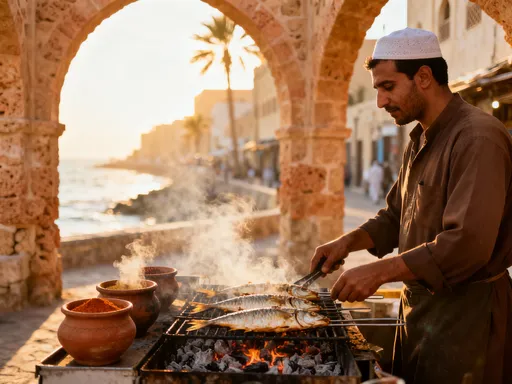
What’s remarkable is how little processing these ingredients undergo. There’s no need for elaborate sauces or complicated techniques — the quality speaks for itself. A simple grilling method is often preferred: fish scored and rubbed with salt, pepper, and lemon myrtle, then cooked over hot coals until the skin crisps and the flesh flakes apart. Served with a side of mango salsa or a squeeze of native finger lime, it’s a meal that captures the essence of the tropics. Even in restaurants, the best dishes are the most straightforward — a grilled mud crab with garlic butter, a bowl of seafood laksa made with house-made broth, or a ceviche of coral trout cured in coconut water and chili.
Practical Tips for Eating Like a True Local in Darwin
To truly experience Darwin’s food culture, timing and approach matter. The best hours to explore are late afternoon and evening, when the heat begins to lift and the city comes alive. Friday and Saturday nights are ideal for the Darwin Night Market, but arriving early — around 5:30 p.m. — means shorter lines and better seating. Midday meals are best enjoyed in shaded cafes or air-conditioned food courts, where you can sample cold soups, fresh juices, and lighter dishes without battling the tropical sun.
Cash remains king in many of Darwin’s most authentic spots. While larger restaurants accept cards, small vendors, food vans, and market stalls often operate on a cash-only basis. It’s wise to carry small bills — $10 and $20 notes — for quick transactions. To find the best food, follow the locals. The busiest stall at the market is usually the best; if there’s a queue of fishermen, nurses, and construction workers, you’re in for a treat. Don’t be afraid to ask for recommendations — Darwin residents are famously friendly and proud of their city’s food scene.
Pairing your meal with a view enhances the experience. Sunset at Mindil Beach, just a short walk from the night market, is legendary. Locals spread out on picnic blankets with takeout containers, watching the sky turn fiery orange and pink as the breeze carries the scent of grilled seafood. Some bring portable speakers, others play guitar — it’s a weekly celebration of place and palate. For a more intimate setting, try a waterfront table at a local seafood restaurant, where you can dine as fishing boats return to port. And always, always order something with native ingredients — it’s the true taste of Darwin.
Why This Food Journey Changes How You See Australia
Tasting Darwin’s food is more than a culinary adventure — it’s a re-education in what Australia can be. Most international perceptions of Australian cuisine revolve around steak, Vegemite, and coffee culture, but Darwin challenges that narrow view. Here, food is a living record of migration, resilience, and cultural harmony. It reflects a city that has survived cyclones, embraced diversity, and built a way of life in one of the country’s most remote and challenging environments. Every dish carries a story — of a grandmother’s recipe saved through war, of a fisherman’s daily catch shared with neighbors, of ancient knowledge passed from elder to child.
Darwin’s cuisine also reveals a deeper truth about Australian identity: it is not monolithic, but layered, evolving, and deeply regional. The north tells a different story than the south, the coast differs from the outback, and urban centers like Darwin showcase a multiculturalism that is both authentic and understated. To eat here is to participate in that story, to sit at the table and be welcomed without pretense. There are no rigid rules, no dress codes, no need to perform — just good food, shared openly.
In a world where food tourism often feels commercialized or performative, Darwin offers something rare: authenticity. It doesn’t serve dishes to impress — it serves them because they’re loved. This is food that doesn’t need Instagram filters or celebrity chefs to prove its worth. It thrives in simplicity, in community, in the quiet pride of people who know what they have is special. To taste Darwin is not just to eat — it’s to understand a place on its own terms, to feel the warmth of its people, and to leave with a full stomach and a fuller heart.