You Won’t Believe How This Mexican Town Turns Streets Into Art
San Miguel de Allende isn’t just another pretty colonial town—it’s a living canvas. Every corner, from cobblestone alleys to pastel rooftops, pulses with creativity. I didn’t expect urban space to feel so alive until I wandered its art-drenched streets. Here, architecture and expression merge, turning sidewalks into galleries and plazas into performance stages. It’s not about seeing art—it’s about living inside it. The town doesn’t merely display beauty; it breathes it. From dawn’s soft light gliding across terracotta tiles to evening shadows framing vibrant murals, San Miguel offers an ever-changing visual rhythm. This is a place where history and imagination coexist, where centuries-old buildings become backdrops for contemporary expression. For travelers seeking more than postcard views, this Mexican gem reveals how art can shape not just walls, but the soul of a city.
The First Impression: A City That Feels Like a Painting
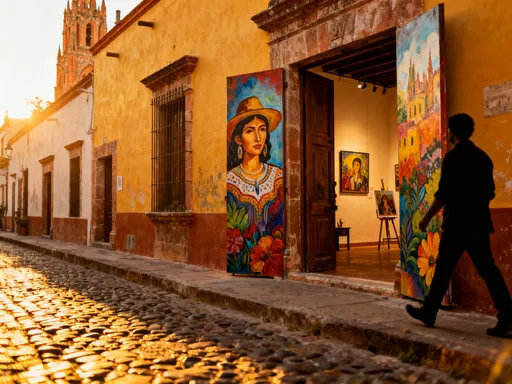
Arriving in San Miguel de Allende is like stepping into a watercolor brought to life. The town unfolds on rolling hills, its red-tiled roofs cascading down slopes like brushstrokes on a canvas. Whitewashed walls contrast with brightly painted doors and window grilles adorned with ironwork in floral patterns. The air carries the scent of bougainvillea spilling over stone walls, while the soft clatter of footsteps echoes along cobbled lanes that twist and turn without grid-like predictability. There is no rigid order—only organic charm shaped by centuries of cultural blending.
Founded in the 16th century as a mission outpost, San Miguel grew into a vital trade and religious center. Its urban design reflects Spanish colonial planning principles, yet adapted to the rugged terrain of central Mexico. Narrow streets follow the natural contours of the land, creating intimate passages that open unexpectedly into sunlit plazas. This irregular layout enhances the sense of discovery, guiding visitors from quiet corners to bustling centers without a sense of direction—only wonder. Each turn reveals a new vignette: a mural tucked between shops, a sculpture peeking from a courtyard, or a street musician playing beneath an archway.
The town’s visual harmony is no accident. In 2008, UNESCO recognized San Miguel de Allende as a World Heritage Site, citing its well-preserved Baroque and Neoclassical architecture and its role in Mexico’s cultural development. This designation has helped maintain the integrity of the historic center, ensuring that new developments respect the town’s aesthetic and structural character. Buildings cannot be altered without approval, and modern signage is carefully regulated. As a result, the cityscape remains cohesive, allowing artistic interventions to feel like natural extensions rather than disruptions.
What sets San Miguel apart from other colonial towns is not just preservation, but transformation. While many historic cities freeze in time, San Miguel evolves—gracefully. The original adobe structures, thick-walled and cool inside, now house galleries, studios, and artisan boutiques. The blend of old and new feels seamless, as if the town has always been an incubator for creativity. Visitors don’t just observe history—they walk through layers of it, each one enriched by contemporary expression.
Art in the Urban Fabric: How Walls, Steps, and Corners Become Canvases
In San Miguel de Allende, art does not wait to be found—it announces itself. Murals stretch across entire façades, transforming blank walls into dramatic narratives of identity, nature, and myth. One moment, you’re passing a quiet residence; the next, you’re face-to-face with a towering image of a hummingbird mid-flight, its iridescent feathers rendered in meticulous detail. These works are not confined to designated zones—they emerge in alleys, stairwells, and the sides of buildings where sunlight hits just right. The city itself becomes a gallery without walls, where every surface holds the potential for surprise.
Local artists often collaborate with international muralists through cultural exchange programs and public art festivals. These partnerships bring fresh perspectives while honoring regional themes. Common motifs include indigenous symbolism, native flora and fauna, and references to Mexican folklore. A mural might depict a Nahua creation story alongside modern interpretations of community and resilience. The color palettes are bold yet balanced—deep cobalt blues, warm ochres, and radiant golds that echo the region’s mineral-rich soil and brilliant skies.
One notable example is the courtyard of the Instituto Allende, a historic art school founded in the mid-20th century. Once a convent, the space now buzzes with student activity and rotating installations. Mosaics made from broken tiles cover columns and fountains, their shimmering surfaces catching light at different angles throughout the day. Students often paint live during open hours, inviting passersby to witness the creative process. This transparency demystifies art-making, reinforcing the idea that creativity belongs to everyone.
Even the most utilitarian spaces are reimagined. Staircases double as color-blocked artworks, with each step painted in gradients that shift underfoot. Small niches in walls, once used for religious icons, now display miniature sculptures or ceramic arrangements. These subtle interventions do not overwhelm the architecture—they enhance it, drawing attention to details that might otherwise go unnoticed. The art doesn’t shout; it whispers, inviting closer inspection. And because many pieces are created with weather-resistant materials, they endure seasonal changes, becoming part of the town’s evolving texture.
Galleries Beyond Glass: Open-Air Creativity and Street-Level Culture
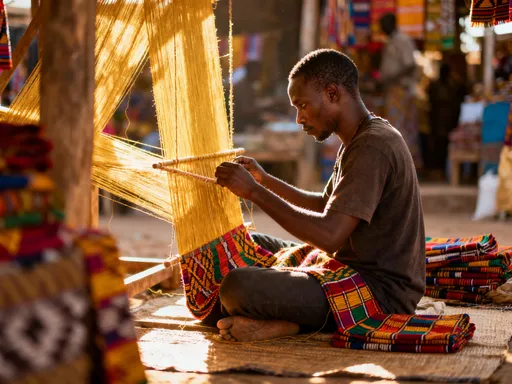
While San Miguel boasts several formal galleries, some of its most compelling art exists outside institutional walls. Creativity spills into markets, doorways, and private gardens opened to the public during cultural events. The weekly artisan market at Parque Juárez, for instance, features not only handcrafted jewelry and textiles but also live painting demonstrations and temporary installations. Visitors can watch an artist layer pigments onto canvas while sipping coffee from a nearby stall, blurring the line between spectator and participant.
Spaces like Fabrica La Aurora exemplify this fusion of industry and imagination. Once a textile factory, the complex was revitalized in the early 2000s into a multidisciplinary arts hub. Today, it houses over fifty studios, including painters, sculptors, ceramicists, and fashion designers. Unlike traditional galleries, many studios welcome drop-in visitors. You might find a sculptor welding metal in one room, a printmaker pulling editions in another, and a jewelry maker setting stones in a sunlit corner. The atmosphere is collaborative, not curated—art in motion, not frozen behind glass.
Another landmark, El Mirador, offers panoramic views of the town and serves as an open-air exhibition space. Benches along the viewpoint are sometimes repainted by local artists, turning functional furniture into collectible pieces. During special events like the San Miguel International Chamber Music Festival or the Cultural Festival of San Miguel de Allende, the site hosts performances, poetry readings, and pop-up art displays. These moments transform public infrastructure into stages for shared experience, reinforcing the town’s identity as a living cultural laboratory.
The accessibility of art in San Miguel fosters inclusivity. Unlike elite art scenes where entry is guarded by price or prestige, here, creativity is democratic. A child can sketch a mural from a safe distance; a tourist can commission a small painting directly from the artist; a resident can host a garden exhibition during the annual Open Studios event. This decentralized model ensures that art remains rooted in community life, not isolated in rarefied spaces. It’s not about exclusivity—it’s about connection.
Urban Rhythm: How Public Spaces Invite Interaction and Expression
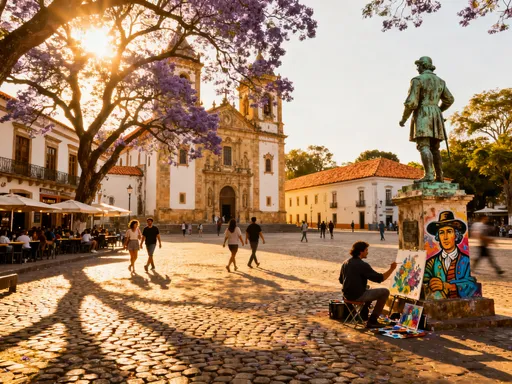
The heart of San Miguel beats in its plazas, especially the central Jardín Allende. Ringed by the iconic pink neo-Gothic façade of the Parroquia de San Miguel Arcángel, this pedestrian square functions as both a gathering place and a performance venue. Benches arranged in a semicircle encourage lingering, while the absence of vehicular traffic creates a safe, serene environment. During the day, locals sip coffee and read newspapers; by evening, the space transforms with music—trios playing rancheras, jazz ensembles, or classical quartets during festival season.
This rhythm of daily life supports spontaneous creativity. Street performers—musicians, dancers, living statues—add to the ambiance without disrupting it. Their presence is regulated to prevent overcrowding, ensuring that performances enhance rather than dominate the space. Visitors often find themselves pausing mid-conversation, drawn in by a violin melody or a dancer’s graceful movement. These unplanned moments become part of the travel memory, not because they were scheduled, but because they felt authentic.
The design of the plaza facilitates interaction. Its slightly elevated center provides visibility, while shaded trees offer relief from the sun. Vendors sell handmade crafts and refreshments from small kiosks, contributing to the sensory richness without cluttering the space. The city’s commitment to pedestrian-friendly planning extends beyond the main square—steep streets are equipped with handrails, and many pathways are lit at night, allowing safe exploration after dark. This attention to walkability ensures that people move slowly, absorbing details rather than rushing through.
Public spaces also serve as venues for civic engagement. Community art projects, such as collective mural paintings or sculpture workshops, are often hosted in parks or schoolyards. Residents of all ages participate, reinforcing intergenerational bonds and shared ownership of the town’s aesthetic. These initiatives are not tourist-driven; they emerge from local desire to maintain cultural vitality. When art is embedded in everyday life, it becomes a form of social glue, strengthening community identity and pride.
The Artist’s Perspective: Why San Miguel Attracts Creative Minds
For decades, San Miguel de Allende has drawn artists from across the globe. Its reputation as a creative sanctuary began in the mid-20th century when American veterans, supported by the G.I. Bill, traveled to Mexico to study art. Many settled permanently, drawn by the low cost of living, mild climate, and welcoming atmosphere. The founding of art schools like the Instituto Allende and Bellas Artes helped institutionalize this influx, creating a supportive ecosystem for emerging and established artists alike.
Today, the town continues to offer practical advantages. Studio spaces, especially in converted colonial homes, are more affordable than in major cities. Natural light—abundant and clear due to the town’s high altitude—makes it ideal for painters and photographers. The pace of life allows for deep focus, while the vibrant expatriate and local artistic communities provide inspiration and collaboration. Artists often speak of a certain “light” in San Miguel—not just physical, but spiritual—a quality that seems to awaken creativity.
The social fabric supports artistic expression. Galleries, cafes, and cultural centers regularly host openings, talks, and critique sessions. Many artists live within walking distance of each other, fostering informal networks of feedback and encouragement. Language is rarely a barrier; English is widely spoken, and the culture of hospitality transcends linguistic differences. Newcomers are often invited to exhibitions or studio visits, easing the transition into the creative community.
Importantly, the town does not romanticize struggle. While some artists embrace the bohemian ideal, San Miguel offers stability—reliable infrastructure, healthcare, and access to supplies. This balance between inspiration and practicality makes it sustainable as a long-term base. Artists aren’t just visiting; they’re building lives. Their presence, in turn, shapes the urban environment—painting walls, teaching workshops, mentoring youth—creating a feedback loop where creativity nurtures the city, and the city nurtures creativity.
Balancing Beauty and Livability: Can Art Overrun a Town?
With growing fame comes challenge. San Miguel de Allende has seen a steady rise in tourism, particularly from North America. While this brings economic benefits, it also raises concerns about overcrowding, rising property prices, and the risk of cultural commodification. Some worry that the town’s charm could be diluted by excessive commercialization—that art might shift from authentic expression to mass-market decoration.
The city has responded with thoughtful planning. Zoning regulations limit the number of short-term rentals, and heritage preservation laws restrict architectural alterations. Local government works with community boards to ensure development aligns with cultural values. For example, new hotels must incorporate traditional design elements and avoid dominating historic views. These measures help maintain the town’s character while accommodating growth.
Community-led initiatives also play a crucial role. Artist cooperatives advocate for equitable access to studio spaces, and local NGOs promote cultural education programs in schools. Events like the Open Studios tour allow residents to share their work without relying solely on tourist dollars. By empowering locals as cultural stewards, the town ensures that art remains a grassroots movement, not just an export product.
There is also a growing emphasis on sustainable tourism. Travelers are encouraged to respect quiet zones, support local artisans directly, and avoid disruptive behavior. Signs in multiple languages remind visitors to appreciate art without touching it, and to photograph respectfully. These small acts of mindfulness help preserve the town’s integrity. Ultimately, the goal is not to stop growth, but to guide it—so that San Miguel remains livable for residents and meaningful for visitors.
Traveler’s Lens: How to Experience the Art of the City Like a Local
To truly appreciate San Miguel’s artistic spirit, one must move beyond checklist tourism. Instead of rushing from landmark to landmark, consider slowing down. Begin with an early morning walk through the historic center, when the streets are quiet and light bathes the buildings in soft gold. This is the best time to photograph murals without crowds and to feel the rhythm of daily life as shopkeepers open shutters and bakers unload fresh bread.
Follow self-guided routes that connect lesser-known art spots. Start at Fabrica La Aurora, spend an hour exploring studios, then walk uphill toward El Mirador for views and a moment of reflection. Pause at small galleries tucked into side streets—many are free to enter and staffed by artists themselves. Engage in conversation when invited, but respect privacy when studios are closed. Remember, these are workplaces, not attractions.
Time your visit around cultural events if possible. The San Miguel Writers’ Conference, the Chamber Music Festival, and the Day of the Dead celebrations offer immersive experiences where art, music, and storytelling converge. Even outside festivals, weekday afternoons often feature free concerts in the Jardín or poetry readings in bookshops. Check local bulletin boards or café noticeboards for schedules—many events are low-key and word-of-mouth.
Support the creative economy ethically. Purchase artwork directly from artists or certified cooperatives, and avoid mass-produced souvenirs sold in tourist-heavy zones. Attend artisan markets with the intention to learn—ask about techniques, materials, and inspiration. A simple conversation can deepen appreciation and ensure your spending benefits the community. Above all, travel with humility. Observe, listen, and absorb. Let the city reveal itself gradually, not on demand.
San Miguel de Allende proves that urban space can be more than functional—it can be poetic. When art isn’t confined to museums but flows through streets and shared places, the city itself becomes the masterpiece. This is what travel should feel like: not just observing beauty, but becoming part of it. In a world where destinations often feel interchangeable, San Miguel stands apart—not because it’s perfect, but because it’s alive. Its walls speak, its plazas sing, and its people create every day. To visit is not to witness art, but to step inside a living story—one brushstroke, one note, one moment at a time.