Wandering Through Hyderabad’s Soul: Where Landmarks Tell Stories
Hyderabad isn’t just a city—it’s a living scrapbook of empires, flavors, and contradictions. As I wandered its streets, I didn’t follow maps; I followed hunches. From the hushed grandeur of ancient mosques to the electric buzz near modern towers, every corner whispered history. The real magic? Discovering how landmark buildings here aren’t frozen in time—they breathe, adapt, and shape daily life in ways you’d never expect. This is a city where the past doesn’t merely survive; it thrives, interwoven with the rhythms of the present. To walk through Hyderabad is to step into a layered narrative, where every archway, courtyard, and skyline silhouette tells a story of resilience, reinvention, and cultural continuity.
First Steps in a Layered City
Hyderabad greets the traveler not with a single face, but with many. Its skyline is a dialogue between eras: the domes of 16th-century mosques rise beside the glass facades of corporate towers, while narrow alleys lined with spice stalls open suddenly onto wide, tree-lined boulevards. This duality isn’t accidental—it’s the essence of the city’s identity. Founded in 1591 by Muhammad Quli Qutb Shah, Hyderabad grew as a cultural crossroads, absorbing Persian, Mughal, and Deccan influences into a unique urban fabric. Today, that legacy persists, not as a museum exhibit, but as a lived reality.
What sets Hyderabad apart from other historic cities is how seamlessly its landmarks are embedded in everyday life. Unlike destinations where monuments are cordoned off, polished for tourists, and treated as relics, Hyderabad’s most iconic structures pulse with activity. The Charminar isn’t just photographed; it’s navigated. The Mecca Masjid isn’t just admired; it’s prayed in, gathered around, and leaned against during midday heat. To understand this city, one must resist the urge to tick off attractions from a checklist. Instead, the most revealing experiences come from wandering—allowing oneself to be drawn by the scent of cardamom in the air, the sound of bargaining in Urdu and Telugu, or the sudden shade of an arched gateway.
This approach to exploration rewards patience and curiosity. It invites the traveler to notice the small details: the way sunlight filters through lattice stone screens at dawn, the call to prayer echoing over rooftops, or the elderly man sipping chai on a step outside a 400-year-old mosque. These moments, fleeting and unscripted, offer a deeper understanding than any guidebook can provide. Hyderabad does not reveal itself all at once. It unfolds slowly, like the petals of a jasmine flower opening at dusk—subtle, fragrant, and deeply rooted in its surroundings.
Charminar: The Pulse at the Center
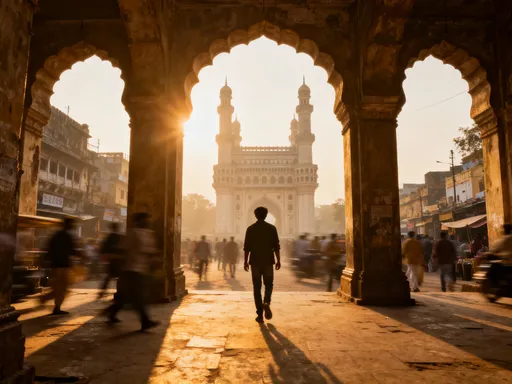
At the heart of Hyderabad stands the Charminar, a monument so central to the city’s identity that it appears on everything from local currency to tourism brochures. Built in 1591 to commemorate the end of a plague, the four-arched structure with its twin minarets rising 56 meters into the sky has become more than a historical marker—it is the city’s living nucleus. To stand beneath its arches is to be immersed in a constant flow of movement: pedestrians weaving through crowds, vendors balancing trays of bangles, and the occasional cow ambling past, unperturbed by the chaos.
The sensory experience of Charminar is overwhelming in the best possible way. The air carries the mingling aromas of freshly fried mirchi bajji, saffron-laced biryani, and the sharp tang of lime pickle. From every direction, voices rise—hawkers calling out prices, families laughing, and the occasional echo of a devotional song drifting from a nearby shrine. The monument itself, though centuries old, shows no signs of being a passive relic. It is climbed by tourists, used as a meeting point by locals, and even functions as an informal traffic circle, with vehicles circling its base in a delicate dance of honks and patience.
What makes Charminar remarkable is not just its architectural elegance—though the symmetry of its arches and the intricate stonework are undeniable—but its enduring utility. Unlike many historic sites that are preserved behind velvet ropes, Charminar remains fully integrated into the city’s daily rhythm. Shops occupy its lower levels, selling everything from embroidered fabrics to imitation jewelry. Staircases worn smooth by centuries of footsteps lead to rooftop views of the surrounding Laad Bazaar, where rows of red bangles glint in the sun like scattered rubies. This accessibility is rare and precious, offering a model of how heritage can coexist with contemporary life.
Yet, this integration comes with challenges. The constant foot traffic and surrounding development have placed strain on the structure, prompting ongoing conservation efforts. Authorities have implemented measures to limit vehicle access and monitor structural integrity, ensuring that the Charminar remains standing for generations to come. But preservation here does not mean sterilization. The goal is not to freeze the monument in time, but to protect its ability to function as a vibrant public space. In this, Hyderabad sets an example: history is not something to be observed from a distance, but something to be lived within.
Mecca Masjid: Silence Amid the Storm
Just a short walk from the bustling energy of Charminar lies the Mecca Masjid, a sanctuary of stillness in the middle of urban clamor. One of the largest mosques in India, its construction began in the early 17th century under Muhammad Quli Qutb Shah and was completed decades later by the Mughal emperor Aurangzeb. The mosque’s name derives from the belief that bricks used in its central arch were brought from Mecca, underscoring its spiritual significance. Today, it remains a place of deep reverence, where the faithful gather five times a day for prayer, and visitors instinctively lower their voices upon entry.
The architecture of Mecca Masjid speaks of both grandeur and humility. Built from hand-carved granite, its vast courtyard can accommodate up to 10,000 worshippers. The main prayer hall, supported by 15 arches, features a mihrab made of a single block of marble, intricately inlaid with Quranic inscriptions. What strikes the observer most is the sense of weight—not just physical, but historical. The stones themselves seem to hold centuries of whispered prayers, footsteps, and moments of reflection. Unlike the ornate domes of Persian design, Mecca Masjid’s aesthetic is restrained, emphasizing symmetry, proportion, and the play of light across stone surfaces.
Yet, the true power of this space lies in its contrast to the city outside. Stepping through its arched gateways is like crossing a threshold into another world. The noise of traffic fades. The heat softens under shaded colonnades. Even on busy Fridays, when the mosque is full, there is a palpable calm, a collective breath held in reverence. This tranquility is not accidental; it is the result of deliberate architectural planning. The thick stone walls absorb sound, while the open courtyard allows breezes to circulate, creating a natural cooling effect long before the age of air conditioning.
Mecca Masjid also exemplifies the engineering ingenuity of its time. The drainage system, designed to carry rainwater away from the prayer area, remains functional after more than 400 years. The acoustics of the main hall allow the imam’s voice to carry clearly without amplification. These features, often overlooked by casual visitors, reveal a deep understanding of materials and environment. More than a place of worship, Mecca Masjid is a testament to how architecture can serve both spiritual and practical needs, blending beauty with utility in a way that modern buildings often fail to replicate.
Golconda Fort: Echoes on the Wind
Rising from the rocky plateau on the western outskirts of Hyderabad, Golconda Fort stands as a monument to both military brilliance and cultural sophistication. Originally a mud fort in the 13th century, it was expanded over centuries by the Qutb Shahi dynasty into a formidable fortress-city, complete with palaces, stables, water systems, and an intricate network of gates and tunnels. At its peak, it was one of the most impregnable strongholds in South India, renowned not only for its defensive design but also for its role as a center of diamond trade—the famed Koh-i-Noor and Hope diamonds are believed to have passed through its courts.
Walking through Golconda today is to experience the poetry of ruins. The fort spans over 11 kilometers in circumference, its walls winding across boulders and ridges like a stone serpent. The climb to the top is gradual, punctuated by narrow gateways designed to slow invaders—a single horseman could be attacked from multiple angles as he passed through. At the summit, the remains of the royal audience hall, known as the Durbar Hall, offer one of the most astonishing acoustic feats in Indian architecture. A handclap at the entrance can be heard clearly over 30 meters away at the emperor’s seat, a feature that allowed guards to signal danger without raising their voices.
This acoustic engineering was not merely for convenience; it was a matter of security. Whispering galleries and sound-conducting passageways enabled communication across vast distances within the fort, ensuring that messages could be relayed swiftly and discreetly. Even the water system was advanced for its time: an elaborate network of underground tanks and channels collected and stored rainwater, allowing the fort to withstand prolonged sieges. These innovations speak to a civilization that valued both defense and daily comfort, blending military strategy with civic planning.
Preservation efforts at Golconda have focused on maintaining authenticity while ensuring visitor safety. Unlike some restored sites that risk losing their historical character, Golconda has been carefully conserved to retain its weathered appearance. Paths are marked, but not paved over ancient stone. Informational signage is minimal, allowing the space itself to tell the story. At sunset, when the fort glows amber in the fading light and the sound and light show begins, narrating its history through music and projection, the atmosphere becomes almost dreamlike. It is in these quiet moments, when the crowds thin and the wind moves through the empty arches, that Golconda feels most alive—not as a monument, but as a memory made stone.
Qutb Shahi Tombs: Beauty in Decay
Nestled in a quiet corner near Golconda Fort, the Qutb Shahi Tombs are a hauntingly beautiful ensemble of mausoleums dedicated to the seven rulers of the Qutb Shahi dynasty. Spread across a 100-acre garden complex, the tombs feature a distinctive fusion of Persian, Indo-Islamic, and Deccan architectural styles. Each dome is unique—some ribbed, others fluted—rising above arched chambers adorned with delicate stucco work and Quranic calligraphy. Built between the 16th and 17th centuries, these structures were once surrounded by lush gardens, fountains, and pavilions, forming a necropolis that reflected the dynasty’s grandeur.
Over time, neglect and weather took their toll. By the late 20th century, the site had fallen into disrepair, with vegetation overtaking pathways and structural damage threatening several tombs. But in recent years, a major restoration initiative led by the Aga Khan Trust for Culture and the Telangana government has revived the complex. Broken domes have been repaired, water channels restored, and pathways cleared, allowing visitors to experience the site as it was intended: a serene, dignified resting place that honors the past without succumbing to decay.
What makes the Qutb Shahi Tombs particularly moving is their quiet dignity. Unlike the grandeur of the Taj Mahal, which draws millions with its symmetrical perfection, these tombs exude a more personal, intimate beauty. There are no crowds, no hawkers, no loudspeakers—just the occasional breeze rustling through the trees and the soft echo of footsteps on stone. At sunrise or sunset, when the light slants across the domes, casting long shadows and gilding the stonework, the atmosphere becomes almost meditative. It is a place for reflection, not spectacle.
Yet, their relative obscurity is both a blessing and a concern. While the lack of mass tourism preserves their tranquility, it also means they are often overlooked by visitors who rush from Charminar to Golconda without pausing to explore the in-between spaces. This is a reminder that heritage is not only about preservation, but also about awareness. The Qutb Shahi Tombs deserve attention not just for their architectural merit, but for what they represent: a dynasty that valued art, learning, and religious tolerance. In their quiet endurance, they offer a powerful counterpoint to the noise of the modern world.
The New Icons: HITEC City and Beyond
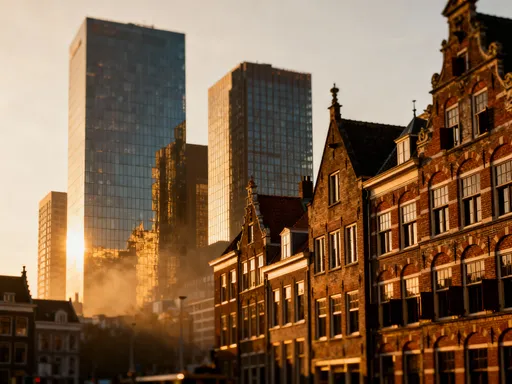
If the Qutb Shahi Tombs represent the soul of Hyderabad’s past, then HITEC City embodies its future. Located in the western part of the city, this sprawling technology park has become the nerve center of Hyderabad’s transformation into a global IT hub. Glass towers housing multinational corporations like TCS, Infosys, and Microsoft rise beside innovation centers and startup incubators. The skyline here is sleek, modern, and distinctly 21st century—a sharp contrast to the stone and mortar of the old city.
HITEC City is more than an economic engine; it is a cultural shift. It has attracted a young, educated workforce from across India and abroad, reshaping the city’s demographics and lifestyle. Cafes serving artisanal coffee, coworking spaces, and tech conferences have become part of Hyderabad’s new rhythm. The architecture reflects this change: open floor plans, energy-efficient designs, and smart building systems prioritize functionality and sustainability. At night, the area lights up like a constellation, its glow visible from miles away.
Yet, this modernization raises important questions about urban identity. Does the rise of glass towers dilute the city’s historical character? Or can modern architecture coexist with heritage in a way that honors both? Some critics argue that the rapid development has led to a visual disconnect—where centuries-old mosques and forts stand in the shadow of anonymous corporate buildings. Others see opportunity: a chance to create a new architectural language that respects the past while embracing innovation.
There are signs of this balance emerging. Some new developments incorporate traditional motifs—jali screens, domed entries, and courtyards—into contemporary designs. Urban planners are increasingly aware of the need to preserve green spaces and maintain pedestrian-friendly zones. The challenge lies in ensuring that growth does not come at the expense of cultural continuity. Hyderabad’s strength has always been its ability to absorb change without losing its essence. The test now is whether this resilience can extend to its built environment.
Between the Monuments: Life in the In-Between
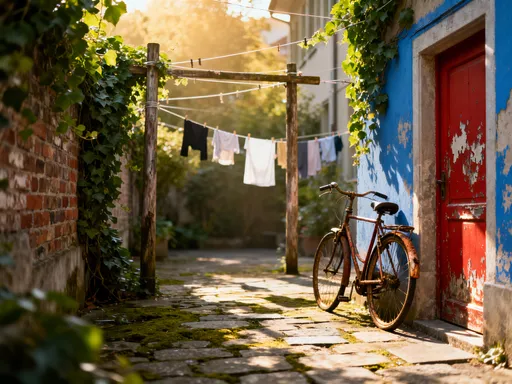
The true heart of Hyderabad is not found only in its famous landmarks, but in the spaces between them. It is in the chai stall tucked beneath a centuries-old archway, where office workers and laborers sit side by side on wooden benches. It is in the sudden hush of a narrow alley, where sunlight filters through laundry lines strung between buildings. It is in the laughter of children playing cricket in a courtyard that once served a royal household. These moments, unremarkable on the surface, are where the city reveals its soul.
One afternoon, while walking from Charminar toward Mecca Masjid, I paused at a small shop selling irani chai and Osmania biscuits. The owner, a man in his sixties with a neatly trimmed white beard, handed me a steaming cup without asking. “First time?” he asked. When I nodded, he smiled. “Then you must sit. The city speaks slowly. If you rush, you’ll miss it.” We talked for nearly an hour—about cricket, about how the weather had changed over the years, about his grandfather who used to sell spices in Laad Bazaar. He never mentioned tourism or monuments. Yet, in that conversation, I learned more about Hyderabad than any brochure could teach.
These human connections are the invisible threads that bind the city together. They remind us that architecture, no matter how grand, is only meaningful when inhabited. A mosque is not just stone and mortar; it is the sound of prayer, the scent of incense, the hand of an elder guiding a child through ablution. A fort is not just walls and gates; it is the story a guide tells with pride, the way a child’s eyes widen at the mention of hidden tunnels. The landmarks are important, but they are not the whole story. The full narrative unfolds in the pauses, the side streets, the unplanned encounters.
To travel through Hyderabad is to practice the art of presence. It is to walk without a fixed destination, to listen more than you speak, to let the city guide you. In a world where tourism is often reduced to photo ops and itinerary checklists, Hyderabad offers a different model—one rooted in patience, observation, and humility. It asks not that you admire it, but that you engage with it.
Conclusion: Wandering as a Way of Seeing
Hyderabad’s landmarks do not merely stand as monuments to the past; they participate in the present. The Charminar pulses with life. The Mecca Masjid holds space for silence. Golconda Fort whispers across centuries. The Qutb Shahi Tombs endure with quiet grace. And HITEC City reaches toward the future. Together, they form a living dialogue between eras, a testament to a city that honors its history while embracing change.
But the deeper truth lies not in the structures themselves, but in how we choose to experience them. To wander through Hyderabad is to practice a different kind of seeing—one that values context over convenience, depth over speed, and connection over consumption. It is an invitation to slow down, to listen, and to allow architecture to speak not through grandeur, but through detail, contrast, and the quiet hum of daily life.
In the end, the most meaningful journeys are not those that follow maps, but those that follow curiosity. They are the walks that begin without a plan and end with understanding. So let go of the itinerary. Step off the beaten path. Sit with a stranger over chai. Let the city unfold at its own pace. Because in Hyderabad, the landmarks are not the destination—they are the beginning of the conversation.