You Won’t Believe What These Cultural Spots in Malacca Reveal
Malacca isn’t just about pretty streets and Instagrammable walls—it’s a living museum. Walking its alleys, I kept stumbling upon places that whispered stories of centuries past. From temples to colonial halls, each cultural venue feels like stepping into a different world. If you’re looking for depth, not just photo ops, Malacca’s heritage spots will surprise you. More than a destination, it’s a journey through time, where every brick, prayer hall, and courtyard tells a story of trade, tolerance, and transformation. For travelers seeking meaning in their explorations, this Malaysian gem offers quiet revelations in the most unexpected corners.
The Heartbeat of Heritage: Exploring Malacca’s Historic Core
At the heart of Malacca lies a historic district recognized by UNESCO as a World Heritage Site—a rare honor reflecting its global cultural significance. This compact yet richly layered city center bears the imprints of centuries of maritime trade, imperial ambitions, and cultural exchange. From the 15th-century rise of the Malacca Sultanate to Portuguese conquests, Dutch colonization, and British administration, each era left behind architectural and social legacies that remain visible today. Walking through the old town is like turning the pages of a living history book, where colonial facades stand beside centuries-old temples and vibrant street art.
The A Famosa fortress, originally built by the Portuguese in 1511, is one of the most enduring symbols of Malacca’s colonial past. Though only the iconic gatehouse remains today, it offers a powerful reminder of the city’s strategic importance in global trade routes. Nearby, the Dutch influence is evident in the red-brick Stadthuys, once the administrative center during the 17th century. Its weathered walls and symmetrical design reflect a European aesthetic adapted to the tropical climate. The surrounding Christ Church, with its striking vermilion exterior and white columns, continues to serve as an active place of worship and a visual anchor in the cityscape.
What makes Malacca’s historic core so compelling is not just its visual charm, but the way history feels accessible. Unlike some heritage cities where the past is cordoned off behind glass, here, history unfolds in everyday life. Shopkeepers sell traditional kuih in alleyways once trodden by spice traders. Families gather in courtyards beneath centuries-old banyan trees. The city does not treat its past as a relic to be preserved in isolation; rather, it integrates it into the rhythm of modern living. This seamless blend of old and new invites visitors to engage with history not as spectators, but as participants.
For travelers beginning their cultural journey, starting in the historic core provides essential context. It offers a foundational understanding of how Malacca became a melting pot of civilizations. The city’s location along the Strait of Malacca made it a natural hub for traders from China, India, the Arab world, and Europe. Over time, these interactions fostered a unique cosmopolitan identity. By walking its streets with awareness, visitors gain insight into how trade, religion, and diplomacy shaped not only Malacca but much of Southeast Asia’s cultural landscape.
Temples That Speak: The Legacy of Religious Harmony
One of Malacca’s most profound cultural revelations is the peaceful coexistence of religious sites across faiths. Within a few hundred meters, travelers can visit a centuries-old Buddhist temple, a Hindu shrine, and a functioning mosque—each preserved with care and still actively used by local communities. This proximity is not accidental; it reflects a long-standing tradition of religious tolerance that has defined Malacca for generations. These sacred spaces are more than architectural wonders—they are living testaments to the city’s inclusive spirit.
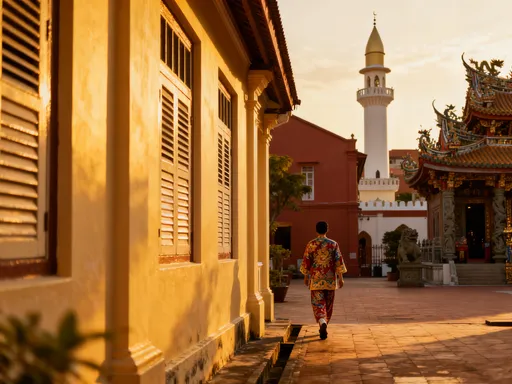
Cheng Hoon Teng Temple, established in the 17th century, is one of the oldest functioning Chinese temples in Malaysia. Nestled along Temple Street, it blends Taoist, Confucian, and Buddhist traditions in its design and daily rituals. The temple’s intricate wood carvings, golden altars, and delicate porcelain details reflect the craftsmanship of early Chinese immigrants. Yet beyond its beauty, what stands out is the quiet reverence that fills the space. Visitors often pause to observe worshippers lighting incense, bowing in prayer, or simply sitting in contemplation. The temple is not a museum piece—it is a spiritual home, where tradition continues to thrive.
Just a short walk away stands the Kampung Kling Mosque, a remarkable example of syncretic architecture. Built in the 18th century by Indian Muslim traders, the mosque incorporates elements from Islamic, Malay, and Chinese design. Its multi-tiered roof resembles a traditional Chinese pavilion, while the minaret bears subtle Indian influences. Inside, the prayer hall is serene, with soft light filtering through wooden latticework. Like Cheng Hoon Teng, this mosque remains an active place of worship, especially during Friday prayers and Ramadan. Its continued use underscores how faith and community remain deeply interwoven in Malacca’s social fabric.
The harmony among religious sites extends beyond proximity—it is reflected in shared customs and mutual respect. During major festivals such as Chinese New Year, Deepavali, and Hari Raya Aidilfitri, neighborhoods come alive with decorations, music, and food, often celebrated across ethnic lines. It is not uncommon to see Muslim families visiting Chinese friends during Lunar New Year or Hindu neighbors exchanging sweets with Muslim households during Eid. This culture of reciprocity is not performative; it is rooted in decades of cohabitation and shared history. For visitors, witnessing this organic interfaith respect offers a powerful counter-narrative to global trends of division and polarization.
Peranakan Culture Uncovered: More Than Just Pretty Houses
Among Malacca’s most distinctive cultural contributions is the Peranakan, or Straits Chinese, community—a unique blend of Chinese ancestry and Malay upbringing that emerged from centuries of intermarriage and cultural fusion. The Peranakans, also known as Baba-Nyonya, developed a rich and elaborate lifestyle that combined Chinese traditions with Malay influences in language, clothing, cuisine, and domestic life. Their legacy is best experienced through heritage homes and museums that preserve this intricate way of life.
The Baba & Nyonya Heritage Museum is one of the most authentic windows into this world. Housed in a series of restored 19th-century townhouses, the museum showcases the opulent interiors of a wealthy Peranakan family. Every room tells a story—from the ancestral hall with its elaborate altars to the bedrooms adorned with hand-embroidered textiles and Peranakan porcelain. The signature blue-and-white ceramic tiles, intricate teakwood furniture, and colorful beaded slippers reflect a blend of aesthetics that is both refined and deeply symbolic. Even the layout of the house follows traditional feng shui principles, illustrating how spiritual beliefs shaped daily living.
What makes the Peranakan experience especially meaningful is its sensory richness. The scent of dried spices lingers in the air, a reminder of the elaborate kitchens where dishes like ayam pongteh and laksa lemak were perfected over generations. The vibrant kebaya blouses worn by Nyonya women—crafted from silk and adorned with hand-stitched beadwork—are not just fashion statements but cultural artifacts. These garments, often passed down through families, represent identity, status, and artistry. Similarly, the Peranakan dialect, a mix of Hokkien Chinese and Malay, reflects the community’s linguistic hybridity.
For visitors, engaging with Peranakan culture goes beyond sightseeing. Many heritage homes welcome guests for guided tours, tea sessions, or even cooking demonstrations. These experiences allow for deeper connection and understanding. However, it is important to approach these spaces with respect. Photography inside private homes should only be done with permission, and visitors should dress modestly out of consideration for the families who may still reside in part of the property. By treating these homes as living spaces rather than photo backdrops, travelers honor the dignity of the culture they are exploring.
Museums With Meaning: Where History Feels Alive
Malacca’s museum scene stands out for its ability to make history tangible. Unlike some institutions that rely on static displays and dense text panels, many of the city’s cultural museums use immersive storytelling, authentic reconstructions, and interactive elements to draw visitors into the past. These spaces do not merely inform—they invite emotional and intellectual engagement, helping travelers connect with Malacca’s layered identity on a personal level.
The Malacca Sultanate Palace Museum is a prime example of experiential history. Built as a replica of the 15th-century royal palace, it offers a vivid glimpse into the golden age of the Malacca Sultanate. Constructed entirely from timber without nails, the palace showcases traditional Malay architecture at its finest. Inside, lifelike dioramas depict court ceremonies, royal weddings, and diplomatic receptions. Mannequins dressed in period costumes stand in royal chambers, while displays of weapons, textiles, and royal regalia illustrate the sophistication of the era. The museum also highlights the sultanate’s role in spreading Islam throughout the region, emphasizing its religious and political influence.
Another standout is the Stadthuys, located in the heart of Dutch Square. Once the office of Dutch governors, it now houses several thematic galleries, including the History and Ethnography Museum. The building’s thick walls and high ceilings create a cool, contemplative atmosphere, ideal for absorbing its exhibits. Displays trace Malacca’s evolution from a small fishing village to a global trading hub, with maps, manuscripts, and artifacts that illustrate the flow of goods and ideas. One particularly moving section documents the lives of ordinary residents during colonial times, offering a human-scale perspective on history often dominated by rulers and empires.
What sets Malacca’s museums apart is their authenticity. Many are housed in original colonial or traditional buildings, preserving the spatial context of the past. This architectural integrity enhances the visitor experience, making it easier to imagine life as it once was. Additionally, museum staff are often knowledgeable and eager to share stories beyond the official narratives. For families or travelers with limited time, prioritizing museums that offer guided tours or multimedia presentations can maximize understanding. Ultimately, choosing to visit these institutions thoughtfully—rather than rushing through—allows for a richer, more reflective encounter with Malacca’s heritage.
Hidden Courtyards and Quiet Shrines: Off-the-Beaten-Path Gems
While Malacca’s main attractions draw well-deserved attention, some of its most meaningful cultural experiences lie beyond the tourist trail. Tucked away in narrow lanes and residential neighborhoods are quiet shrines, ancestral halls, and community spaces that reveal the intimate side of local life. These lesser-known venues are not designed for mass tourism; they exist for worship, remembrance, and continuity. Discovering them requires curiosity, respect, and a willingness to slow down.
One such gem is the Cheng Ho Cultural Museum, dedicated to the legendary Chinese admiral who visited Malacca in the 15th century. Located slightly outside the city center, the museum is built in traditional Chinese architectural style and features exhibits on Zheng He’s voyages, maritime history, and Sino-Malay relations. What makes it special is its peaceful garden courtyard, where visitors can sit and reflect. Unlike busier sites, this space encourages quiet contemplation, making it ideal for those seeking a more meditative travel experience.
Another hidden treasure is the Kampung Morten heritage village, a preserved Malay settlement along the Melaka River. Here, traditional wooden houses on stilts line narrow footpaths, offering a glimpse into pre-modern village life. Some homes function as small museums or guesthouses, allowing visitors to engage with residents and learn about daily customs. The area is especially serene at dusk, when the river reflects the golden light and the sound of evening prayers drifts from nearby mosques. Because it is a living community, visitors are expected to tread quietly and avoid intrusive behavior.
Family-run clan jetties, such as those belonging to the Hoe, Lee, and Tan clans, also offer unique cultural insights. Built by early Chinese immigrants along the waterfront, these wooden stilt houses remain home to descendants of the original settlers. While access to private areas is restricted, walking along the boardwalks provides a sense of community resilience and adaptation. Some jetties host small shrines or altars where families honor ancestors, reinforcing the importance of lineage and memory. By visiting these spaces with humility and awareness, travelers gain access to a side of Malacca that cannot be captured in guidebooks.
Cultural Events That Bring History to Life
Timing a visit to Malacca around its traditional festivals can transform a cultural tour into a deeply immersive experience. Throughout the year, the city hosts events that animate its heritage, turning streets, temples, and mosques into stages for living history. These celebrations are not performances for tourists—they are authentic expressions of faith, identity, and community. Participating, even as an observer, allows travelers to witness culture in motion.
One of the most vibrant occasions is Chinese New Year, particularly at Cheng Hoon Teng Temple. The temple is adorned with red lanterns, floral arrangements, and calligraphy banners. Families gather for special prayers, and the air fills with the scent of incense and roasted meats. Lion dances wind through the streets, their rhythmic drumming echoing off colonial buildings. While the festivities are joyful, they are also deeply spiritual, centered on renewal, gratitude, and ancestral remembrance. Visitors are welcome to observe, though they are encouraged to remain respectful during prayer times.
Hari Raya Aidilfitri, marking the end of Ramadan, is another significant event. Mosques like Kampung Kling and Melaka Straits Mosque host open houses, where Muslim families welcome neighbors of all backgrounds to share festive meals. The aroma of rendang, ketupat, and satay fills the air, and children in traditional attire receive ang pow-like gifts. This spirit of generosity and inclusion embodies the communal values that have long defined Malacca. For travelers, accepting such hospitality is a rare opportunity to experience genuine cultural warmth.
Other events, such as Thaipusam and Mid-Autumn Festival, further illustrate the city’s multicultural calendar. Thaipusam, celebrated by the Hindu community, features processions with kavadis and devotional music, while the Mid-Autumn Festival brings glowing lanterns and mooncake exchanges. By aligning their visit with these events, travelers gain a deeper appreciation for how history is not just remembered, but reenacted and renewed each year.
How to Experience Culture Respectfully (And Meaningfully)
As Malacca’s popularity grows, so does the responsibility of visitors to engage with its heritage mindfully. Cultural tourism, when done well, benefits local communities and preserves traditions. When done poorly, it risks reducing sacred spaces to photo opportunities and commodifying deeply held beliefs. To ensure a meaningful and respectful experience, travelers should follow a few simple but important guidelines.
Dress modestly when visiting religious sites. Shoulders and knees should be covered at temples, mosques, and prayer halls. Many places provide scarves or sarongs for visitors who arrive unprepared—use them without hesitation. Remove shoes before entering homes, shrines, or certain temple areas, as this is a sign of respect. Speak in hushed tones, especially during prayer or meditation times, and avoid disruptive behavior such as loud conversations or music.
Always ask permission before photographing people, particularly during rituals or private moments. While many locals are friendly and open to interaction, not everyone welcomes being photographed. Respect their boundaries. When in doubt, a smile and a simple gesture of asking go a long way. Additionally, support local artisans by purchasing handmade crafts, textiles, or traditional snacks directly from small vendors. This not only sustains cultural practices but also ensures that tourism benefits those who keep the heritage alive.
Finally, travel slowly. Rushing from one site to another may check boxes, but it rarely leads to understanding. Spend time sitting in a quiet courtyard, chatting with a shopkeeper, or savoring a bowl of asam pedas. Let the city reveal itself at its own pace. By approaching Malacca not as a checklist, but as a living community, travelers do more than see history—they become part of its ongoing story.
Malacca’s cultural venues aren’t frozen in time—they’re part of a living, breathing community. By visiting with curiosity and respect, travelers don’t just see history; they become part of its next chapter.