You Won’t Believe These Hidden Giants in Teotihuacan
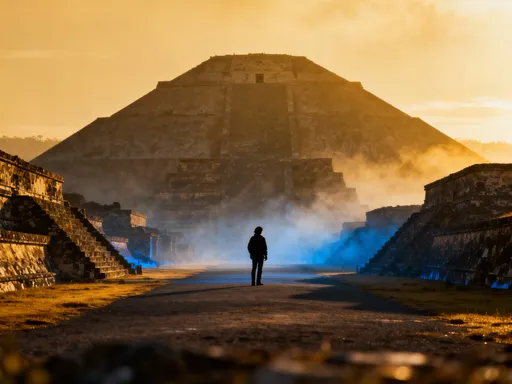
Standing before the Pyramid of the Sun, I felt smaller than ever—this ancient city isn’t just ruins, it’s a heartbeat from the past. Teotihuacan, Mexico, once home to a powerful civilization, still pulses with mystery and grandeur. Its landmark buildings rise like whispers from a forgotten world. If you're chasing more than just photos, this place will shift something inside you.
Arriving at a Forgotten World
The journey from Mexico City to Teotihuacan sets the tone for what lies ahead. As the urban sprawl fades into the rearview mirror, the landscape shifts—dry highland plains stretch under a wide sky, dotted with cacti and low shrubs. The air grows cooler, crisper, carrying the faint scent of earth and sage. About an hour’s drive northeast of the capital, the horizon begins to change. A subtle rise in the land hints at something monumental beneath the surface. This is no ordinary archaeological site; it is the remains of one of the largest cities in the ancient Americas, a metropolis that once housed over 100,000 people at its peak around 450 CE.
Entering the archaeological zone feels less like arriving at a tourist destination and more like stepping into a sacred timeline. The Avenue of the Dead, the city’s central spine, stretches nearly three miles from the Pyramid of the Moon in the north to the Citadel and the Temple of the Feathered Serpent in the south. Lined with platforms, temples, and plazas, it was never a street for the living—it was a ceremonial corridor, designed to guide processions and align with celestial events. The name was given by the Aztecs centuries after the city’s decline, who believed the structures along the avenue were tombs. While they were mistaken, their reverence was not unfounded.
What strikes most visitors is the silence. Unlike heavily commercialized sites with constant chatter and souvenir vendors, Teotihuacan retains a quiet intensity. Especially in the early morning hours, when the sun casts long shadows and the air is still cool, the site feels alive with presence. There are no grand signs shouting facts or timelines—just the stones, the wind, and the occasional rustle of a lizard darting between cracks. This is a place where history isn’t explained; it’s felt. The scale is overwhelming, but not in a way that distances you—it draws you in, inviting contemplation rather than distraction.
The Pyramid of the Sun: Power in Stone
Rising 246 feet above the valley floor, the Pyramid of the Sun dominates the skyline of Teotihuacan. It is the largest structure in the pre-Columbian Americas and one of the most massive pyramids in the world by volume. Built around 100 CE, it predates the rise of the Maya and Aztec civilizations, yet its influence echoes through both. What makes it even more remarkable is its precise alignment with the setting sun on certain days of the year, suggesting that its builders possessed advanced astronomical knowledge. The pyramid sits directly east of the Avenue of the Dead, aligned with the peak of Cerro Gordo to the north, reinforcing its connection to the natural and celestial landscape.
Climbing the pyramid is not for the faint of heart. Its steep steps, worn smooth by centuries of wind and weather, demand focus and steady breath. But those who make the ascent are rewarded with a view that stretches across the entire site—a panorama of geometric precision laid out in stone and earth. From this vantage point, the city’s grid-like design becomes clear, with its north-south and east-west axes reflecting a deep understanding of urban planning. The surrounding valley unfolds in shades of ochre and green, and on clear days, the distant peaks of the Sierra Nevada come into view.
But the impact of the Pyramid of the Sun is not only visual—it is emotional, even spiritual. Many visitors report a sense of stillness, a moment of clarity that feels out of place in our fast-paced world. Whether it’s the altitude, the silence, or the sheer weight of time embedded in the stones, something shifts when you stand at the summit. Archaeologists have discovered a network of tunnels beneath the pyramid, including a cave believed to have been a sacred space long before construction began. This suggests the site was chosen not just for its visibility, but for its symbolic meaning—a place where the earthly and the divine intersected.
The Temple of the Feathered Serpent: Where Myth Meets Architecture
At the southern end of the Avenue of the Dead stands one of Teotihuacan’s most artistically rich structures—the Temple of the Feathered Serpent. Also known as the Temple of Quetzalcoatl, though the name was applied much later by the Aztecs, this pyramid is unlike any other in the city. Its façade is adorned with alternating heads of the feathered serpent and a related aquatic deity, carved in high relief from volcanic stone. The serpent’s plumed head, with its sharp beak and coiled feathers, is both majestic and intimidating, symbolizing the fusion of earth and sky, water and fire, life and transformation.
What makes this temple particularly significant is not just its artistry, but what lies beneath it. Excavations in the early 2000s revealed a sealed tunnel running beneath the pyramid, filled with offerings—jade masks, obsidian blades, rubber balls, and even the remains of sacrificed individuals. Over 200 people, many young males in military attire, were buried in mass graves around the structure, suggesting that the temple was a center of political and religious power, possibly linked to military orders or elite rituals. These findings point to a society where religion and governance were deeply intertwined, where architecture served not just ceremonial purposes but also as a tool of authority.
The atmosphere around the Temple of the Feathered Serpent is markedly different from the open expanse of the Pyramid of the Sun. Here, the space feels enclosed, even somber. The intricate carvings, though weathered, still convey a sense of watchfulness, as if the stone eyes are tracking your movements. The temple was part of the Ciudadela, a large complex that may have housed the city’s ruling class. Unlike other pyramids, it was built later in Teotihuacan’s history, possibly during a period of increased militarization. Its presence speaks to a shift in ideology—one where divine symbolism was used to legitimize power and control.
The Pyramid of the Moon: A Quieter Majesty
At the northern end of the Avenue of the Dead, the Pyramid of the Moon crowns the landscape like a natural extension of the mountains behind it. Though slightly smaller than the Pyramid of the Sun at about 140 feet tall, its position gives it a commanding presence. It appears larger when viewed from the south, thanks to an optical illusion created by the rising terrain. This pyramid was built in multiple phases, with each new ruler adding layers to assert their legacy, much like a stone biography.
Reaching the top requires climbing a steep staircase, but the effort is rewarded with one of the most breathtaking views in the entire site. From the summit, the entire city unfolds in perfect symmetry—the Avenue of the Dead stretches southward like a ribbon, flanked by platforms and pyramids, all framed by the distant peaks. This alignment was no accident. The pyramid was designed to mirror the shape of the surrounding mountain, Cerro Patlachique, reinforcing the belief that the city was a reflection of the cosmos. The platform at the top was likely used for ceremonies, possibly involving offerings to water or fertility deities.
Local tradition holds that the Pyramid of the Moon was dedicated to a great goddess, perhaps a precursor to the later Aztec earth goddess, Tlaltecuhtli. While there is no definitive proof, the discovery of female figurines and offerings associated with water and vegetation supports this idea. What is certain is that fewer people climb this pyramid, making it a haven for quiet reflection. Unlike the often-crowded summit of the Sun Pyramid, the Moon offers solitude. Visitors often stand in silence, absorbing the vista, feeling the wind on their skin, and sensing a connection to those who once stood in the same place, making offerings to forces beyond understanding.
Beyond the Big Three: Hidden Structures That Speak Volumes
While the Pyramid of the Sun, the Pyramid of the Moon, and the Temple of the Feathered Serpent draw the most attention, Teotihuacan is far more than a trio of monumental pyramids. Scattered throughout the site are residential compounds, palaces, and temples that reveal the complexity of daily life in this ancient city. One of the most revealing is the Palace of Quetzalpapálotl, located west of the Avenue of the Dead. Its name, meaning “Butterfly Quetzal,” was given in modern times, inspired by the delicate bird and butterfly motifs carved into its columns. The palace features a central courtyard surrounded by columned porticos, once painted in bright reds and greens, with murals depicting nobles, priests, and celestial beings.
Another remarkable site is the residential compound of Tetitla, one of several neighborhoods that housed the city’s common people. Unlike the grand public buildings, Tetitla offers a glimpse into domestic life. Its walls are adorned with faded but vibrant frescoes—scenes of deities, ritual offerings, and everyday activities like farming and weaving. These murals suggest that religion was not confined to temples but woven into the fabric of home life. The houses were multi-family dwellings, arranged around courtyards, indicating a highly organized and communal society. Similar compounds, such as Atetelco and Yayahuala, show regional variations in style and decoration, hinting at a diverse population drawn from different parts of Mesoamerica.
These residential areas challenge the common perception of Teotihuacan as a purely religious or ceremonial city. It was, in fact, a bustling urban center with markets, workshops, and administrative buildings. Artifacts found here include obsidian tools, pottery, and spindle whorls, evidence of a sophisticated economy. The city’s layout, with its grid system and drainage channels, reflects advanced engineering. Teotihuacan was not just a place of worship—it was a living, breathing metropolis where art, culture, and daily rhythm coexisted in harmony.
How to Experience Teotihuacan Like a Seeker, Not Just a Tourist
To truly appreciate Teotihuacan, timing and intention matter. Most large tour groups arrive mid-morning, so arriving at opening time—typically around 9:00 AM—allows you to experience the site in relative peace. The early light enhances the textures of the stone, and the cooler temperatures make climbing the pyramids more comfortable. Wear sturdy, closed-toe shoes with good grip, as the steps are uneven and can be slippery, especially after rain. Bring plenty of water, a wide-brimmed hat, and sunscreen—there is little shade, and the high-altitude sun can be intense.
While it’s possible to explore independently, hiring a certified local guide can deepen your understanding of the site. Many guides are trained archaeologists or historians who can explain the symbolism behind the carvings, the significance of alignments, and the latest research findings. If a guide isn’t within your budget, consider downloading a reputable audio tour app before your visit. These often include commentary from experts and can be paused and replayed at your own pace.
Don’t skip the small on-site museum, located near the entrance. It houses artifacts recovered from excavations—pottery, jewelry, figurines, and reconstructed murals—that provide context for what you’re seeing. One of the most moving exhibits is a display of child burials found beneath the Temple of the Feathered Serpent, a sobering reminder of the rituals that once took place here. While climbing the pyramids is allowed, do so only if you’re in good physical condition. The altitude—over 7,500 feet above sea level—can affect even healthy individuals. Take your time, breathe deeply, and stop if you feel dizzy or short of breath.
For a more contemplative experience, visit on a weekday rather than Sunday, when Mexican families often come for outings. And while it’s tempting to capture every moment on your phone, try to put it away for stretches of time. This is a place to absorb, not just document. Walk slowly. Sit on a bench. Listen to the wind. Let the silence speak. You’ll leave not just with photos, but with a sense of having touched something timeless.
Why These Ancient Buildings Still Matter Today
Teotihuacan was not built by the Aztecs, yet they revered it deeply, calling it “the place where gods were created.” When the Aztecs discovered the abandoned city centuries after its fall—likely due to internal unrest or environmental strain—they believed it was the work of divine beings. They named its structures, adopted its symbols, and incorporated its legacy into their own mythology. This reverence underscores a truth: greatness leaves a mark, even when its creators are forgotten.
The city’s influence extended far beyond its walls. Its architectural style, urban planning, and religious iconography spread across Mesoamerica, from the Maya lowlands to the Gulf Coast. The feathered serpent motif, for example, appears in later cultures, evolving into the Aztec god Quetzalcoatl and the Maya Kukulkan. The grid layout of Teotihuacan may have inspired the design of other cities, including Tenochtitlán, the capital of the Aztec Empire. Even today, modern architects and urban planners study its alignment and drainage systems for lessons in sustainable design.
But beyond its historical and architectural significance, Teotihuacan offers a deeper lesson—one about human purpose. In a world obsessed with speed, convenience, and short-term gains, this city stands as a testament to vision, unity, and long-term thinking. It was built without the wheel, without iron tools, without written records as we know them—yet it endured for centuries. Its creators were not kings or emperors in the traditional sense, but a collective society that worked toward a shared ideal. These buildings are not just stone; they are statements. They say: we were here. We believed. We built for eternity.
Walking the Avenue of the Dead, you’re not just observing history—you’re participating in it. The same stones that carried priests, rulers, and pilgrims now carry you. The wind that whispered through the temples then still moves through your hair today. Teotihuacan doesn’t ask for worship. It asks for attention. For reflection. For remembrance. In a single visit, it can shift your perspective, reminding you that legacy is not measured in likes or followers, but in meaning, connection, and the courage to build something that lasts.
Teotihuacan’s monumental structures aren’t just relics—they’re invitations. To wonder. To reflect. To remember that humans have always reached for meaning, building not just homes, but legacies. When you walk that ancient avenue, you’re not just a visitor—you’re part of a continuing story.